Follow the Money: A Cynicritical View About Healthcare AI
· Dr. Ramy Azzam
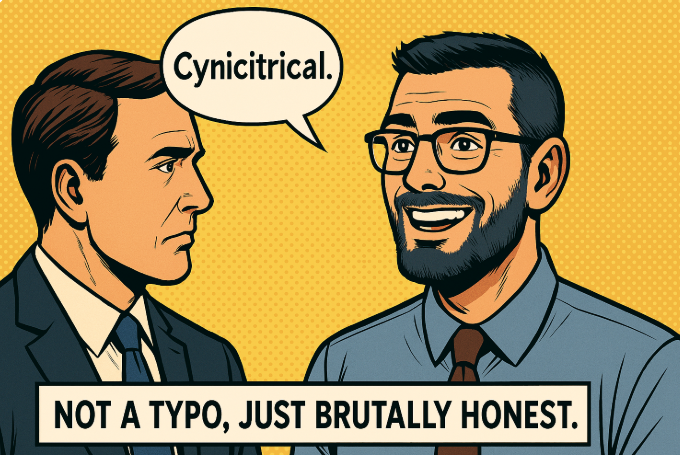
During a recent conversation with a fellow public health researcher, I found myself facing a pointed observation. He said to me, "You're being very cynically critical." I replied, "Cynicritical?" ????
 Anyway, the gist of the conversation was of course about the regular suspects: AI, Digital Health, Payment Models... etc. Below are a few caveats from that conversation and some of the research that we are doing. Let’s jump right into the pain that is most visible: Insurance.
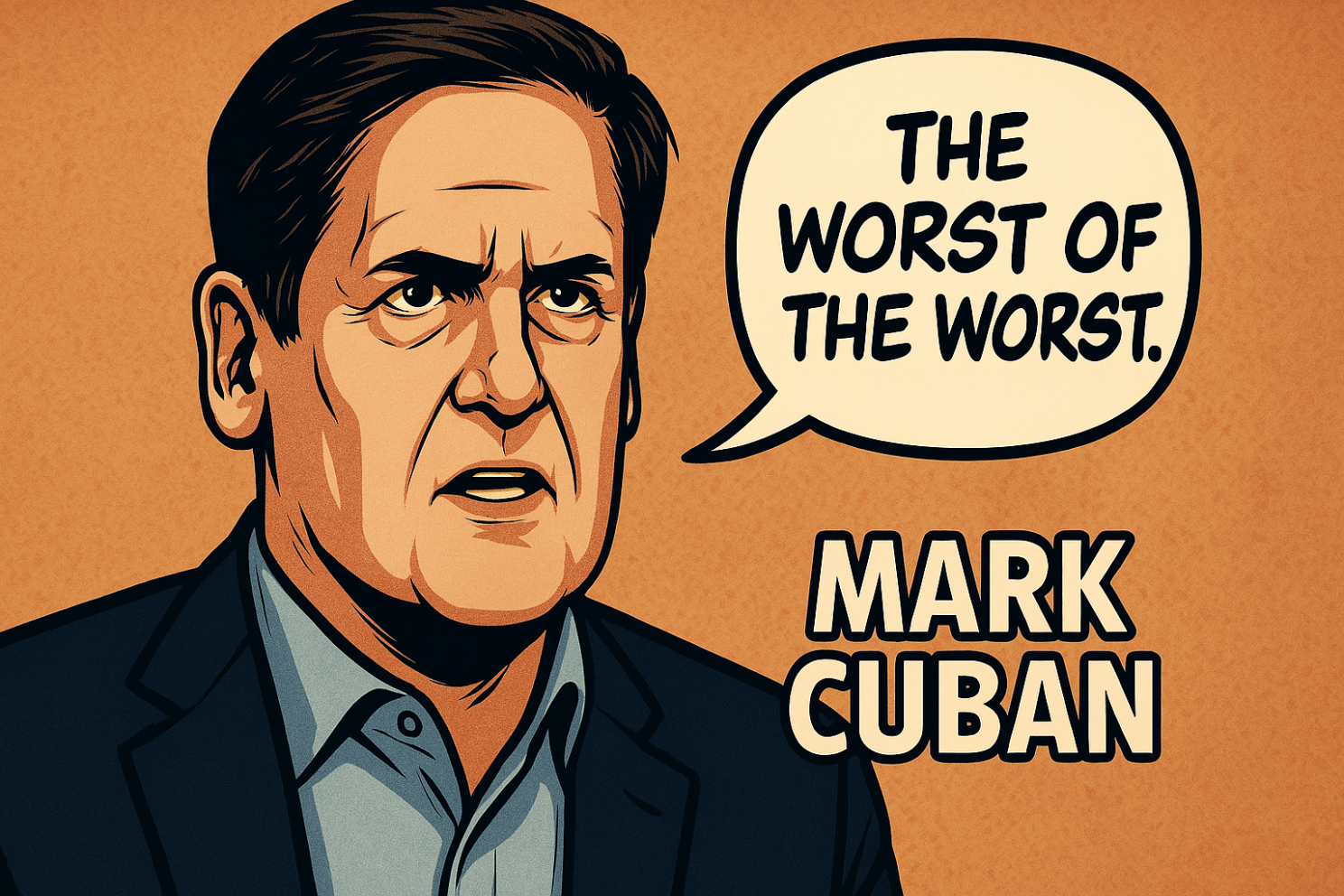
Recently, Mark Cuban sharply criticized medical insurers, calling them "the worst of the worst." Great interview by Graham Walker, MD btw. Watch it here. In this interview, Cuban criticized many aspects of the state of broken healthcare systems. And before you say, "Yeah, but that's only in the US" the reality is that the US exports the majority of healthcare related research and, to put it simply, progress, so their practices affect & influence most healthcare systems. Cuban's critique, however, isn't mere hyperbole; it reflects a stark reality of insurance ridden healthcare systems, globally.
Remember how in 2023, UnitedHealth Group deployed an algorithm called nH Predict, intended to streamline decisions about elderly patient care. Yup, it quickly became controversial. A class-action lawsuit revealed a staggering 90% error rate, routinely denying essential patient care. Similarly, Cigna Healthcare AI systems denied hundreds of thousands of claims in less than two seconds each, often without meaningful physician oversight. These examples are and should be a wakeup call, for the use or misuse of AI.
Mark Cuban's critique resonates deeply, highlighting the urgent need for disruption in the healthcare industry. His efforts, including his own direct-to-consumer pharmacy initiative, Cost Plus Drugs, show a commitment to making healthcare more transparent and affordable. With deep pockets and a bold vision, Cuban might be exactly the disruptor healthcare needs.
A Quiet Collusion: Payers, Providers, and Profit Cycles
Healthcare’s Machiavellian cycle isn’t new; payers and providers have danced around reimbursement and denial strategies for decades. Now, AI has simply accelerated their waltz.
Take Charta Health, an AI startup adept at automating patient chart reviews to uncover missed billing opportunities, rapidly generating half a million dollars in revenue within two months. Effective? Absolutely. Ethical? Perhaps. But is its core motivation patient-centered care or just another clever extraction of profits from a complex billing maze?
Similarly, major electronic medical record (EMR) companies, renowned for their shiny interfaces and persuasive marketing strategies, frequently trap healthcare providers into their restrictive ecosystems. These EMR systems often require lengthy, complicated decision-making cycles for minor changes, effectively limiting organizational agility. As a result, hospitals and clinics become locked into expensive and inefficient arrangements, prioritizing the vendor’s revenue streams over genuine patient care enhancements.
Positive Examples: AI Done Right (Or At Least Better)
It would be unfair, however, to cast all healthcare AI endeavors in a negative light. Some companies genuinely leverage AI to enhance patient outcomes and operational efficiency.
Cera Care, for instance, has successfully reduced hospital admissions by nearly 70% among older patients in the UK through predictive AI interventions. Their substantial revenue, over £300 million annually, comes from tangible patient benefits rather than aggressive denial strategies.
Similarly, Australia’s Pro Medicus and its AI-driven imaging software have drastically improved efficiency in medical imaging, securing contracts with leading US hospitals and growing into a $27 billion enterprise. Profit-driven? Of course. But here, profits and patient outcomes at least seem aligned.
Doximity and Palantir also exemplify how AI can boost revenues and operational efficiency positively. Doximity’s stock soared by integrating AI into telehealth, significantly enhancing clinical workflows. Palantir’s AI tools streamline hospital operations, benefiting both financial health and patient care quality.
AI’s Dark Side: Data Biases and Ethical Risks
However, efficiency alone doesn't erase the ethical ambiguities of AI deployment. Data-driven algorithms inherently risk embedding systemic biases. For instance, recent studies exposed significant racial disparities within clinical algorithms, disproportionately affecting minority patient outcomes (Obermeyer et al., 2019; Benjamin, 2022; Geneviève et al., 2023). Without rigorous oversight and ethical frameworks, these biases become amplified rather than mitigated.
The tension here is clear: when profits drive innovation unchecked, vulnerable populations frequently suffer from overlooked or undervalued care. Transparency remains sparse, and accountability often proves elusive.
The Regulatory Challenge: Guardrails or Illusions?
Regulatory oversight of AI in healthcare remains fragmented and inconsistent. In many countries, including the United States, AI technologies face minimal scrutiny compared to pharmaceuticals or medical devices. While the FDA and other regulators are gradually addressing this, progress remains slow, allowing AI-driven companies ample space to innovate (and exploit) without checks.
Mark Cuban’s entry into healthcare underscores this critical gap. His outspoken critiques and practical interventions spotlight regulatory inadequacies and pressure policymakers to reconsider healthcare AI governance. Cuban’s involvement exemplifies how external disruptors can drive change where internal stakeholders are resistant or complacent.

The Bottom Line: Who Wins, Who Loses?
Perhaps it boils down to a simple, if somewhat cynical, axiom: AI will deliver exactly what it’s incentivized to deliver. Without restructuring healthcare’s incentive systems, AI won't inherently make healthcare more ethical; it will merely become more efficient at pursuing existing incentives.
Therefore, the next time a healthcare AI breakthrough is hyped, ask yourself:
Who profits most directly from this innovation?
Who designed the algorithm, and what incentives drove its design?
And crucially, who's accountable when things go wrong?
After all, if you truly want to understand healthcare AI, follow the money.