Healthy Populations as an Ethical Revenue Model
· Dr. Ramy Azzam

If you are from healthcare, it is no secret that healthcare has long profited from illness.
The current model rewards hospitals and insurers when people fall sick. The healthier the population, the less the system earns. This misalignment is not only unsustainable, it is downright unethical.
The real opportunity I present lies in reversing this model: building healthcare systems that generate revenue by keeping people healthy.
Yes, revenue, not “fluffy” ROI.
I’ve put “fluffy” in quotes because I once worked with a hospital CEO who considered favourable clinical outcomes “fluffy”. ??
Anyway, in this article, of course digital health plus a full-risk capitated model are the foundation of this pivot. Together, they create a framework where healthy individuals become the cornerstone of an ethical revenue model.
We Know Why the Current Model Is Broken
Traditional healthcare functions like a reactive business. Interventions begin once patients present with symptoms, often too late in the disease trajectory, well because patients are not experts in symptoms. While personalized medicine has improved some aspects of treatment through precision genomics, AI-based diagnostics, and targeted therapies, the incentives still reward treating sickness, not preventing it.
This misalignment also introduces the classic forms of moral hazard. Ex ante moral hazard arises when individuals under-invest in their own health behaviors because they know the system will cover costs once they get sick. Ex post moral hazard appears when patients or providers over-utilize services after illness occurs, since the financial risk lies with payers rather than them. Both hazards reinforce the illness-driven revenue cycle.
If healthcare continues down this path, not only will patients suffer, with bankruptcy being the best-case scenario, but systems will collapse under cost pressures and rising chronic disease burdens. We can already see this in countries where healthcare spending consumes double-digit percentages of GDP while outcomes stagnate.

What would you choose?
Value-Based Care and Full-Risk Models: Realigning Incentives
Everyone throws around the term value-based care, but only very few have really implemented it. There are multiple attempts at unlocking value based care but to me only one model makes sense: a prospective full-risk capitated model.
In this model, payers provide a fixed fee per patient (also known as subscriptions) to providers, who assume full responsibility for keeping individuals healthy. The incentives here flip. Instead of tug-of-war between payers (who want to minimize cost) and providers (who profit from more services), both sides now align around a common goal: healthier populations.
Innovation becomes essential: Providers deploy digital health, preventive screenings, AI-based triage, and community programs to keep costs low and outcomes high. Why you ask? To save as much as possible fro that fixed fee.
Social responsibility is built-in: Healthy individuals effectively subsidize care for those with chronic conditions. This redistribution mirrors a socially equitable model. In healthcare economics, it is called risk-pooling or cost-pooling.
Game theory in practice: A Nash equilibrium emerges, payers gain predictability, providers innovate to preserve resources, and patients enjoy proactive care.
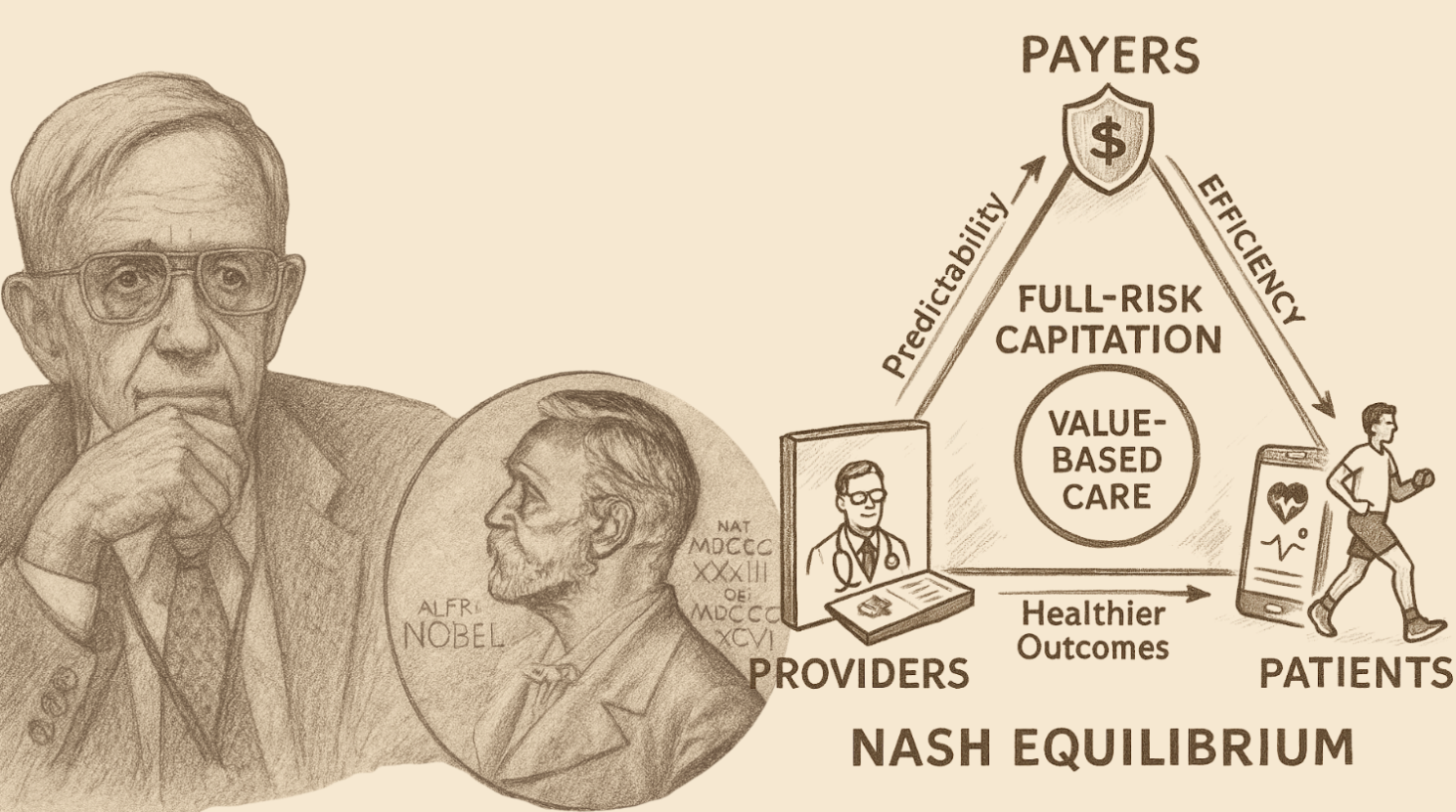
A Nobel laureate, John Nash's work in economics is under utilised in healthcare. His life story inspired the movie Beautiful Mind.
My Thesis: Award Systems that Reward Health
On top of the above, I propose an additional layer beyond payers and providers. By integrating other stakeholders in the macroeconomy who have a vested interest in wellness and fitness, we can create even stronger incentive structures.
Companies such as Adidas, Nike, Technogym, Whoop, to name a few, who directly benefit when individuals stay healthy and active, their participation in the incentive pool enhances the payment system, allowing these players to co-reward users and providers, creating collaborations that attract new users, unlock economies of scale, and cross-sell wellness services.
It may sound socialist, which isn't a bad thing in healthcare. But what is certain is that, it is ethical: monetizing health instead of monetizing sickness.
Imagine if a provider enrolled in a capitated primary care model where patients received discounts on Adidas running shoes, Technogym memberships, or Apple Fitness subscriptions for meeting wellness milestones. In return, these corporates, share the risk and rewards with providers, financially and otherwise. These partnerships extend the logic of preventive care into lifestyle, creating shared value across industries.
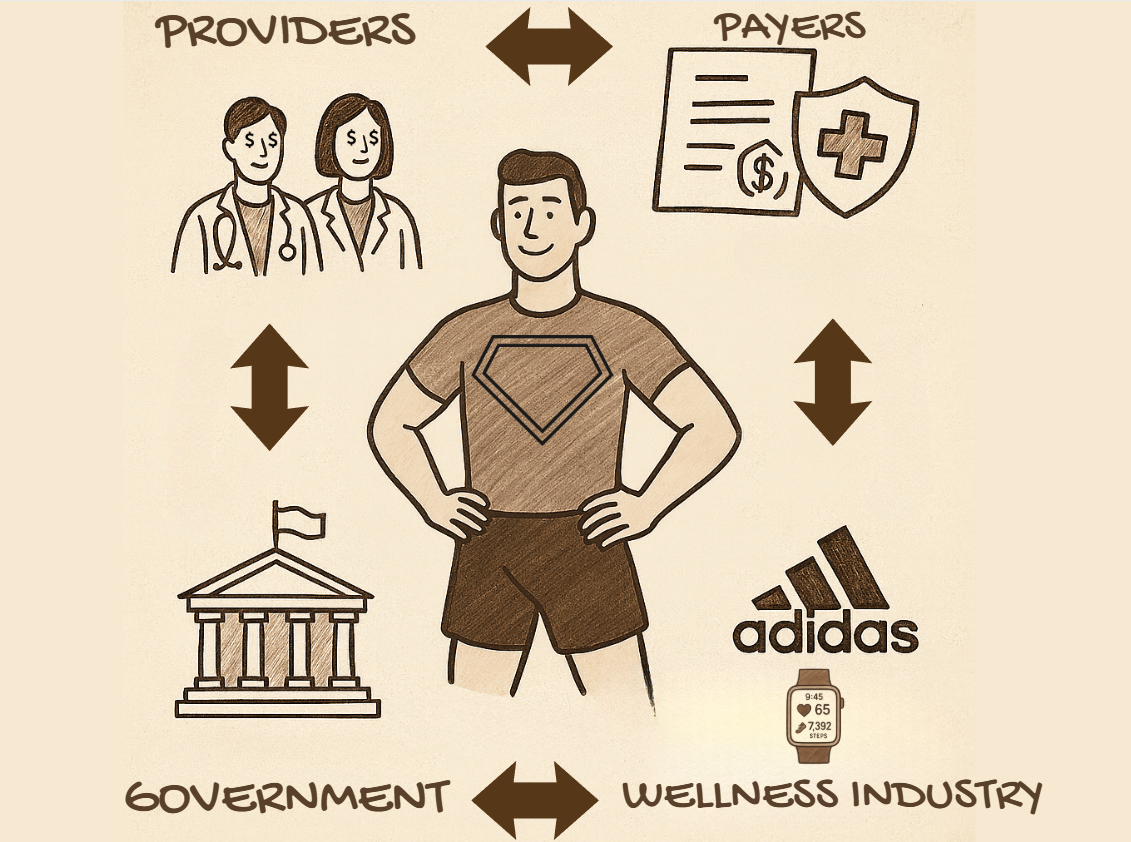
Imagine Monetising Health
Some Real-World Proof Points
ChenMed in the United States is an organization that pioneered full-risk, capitated primary care for seniors. By taking complete responsibility for patient outcomes, ChenMed uses data-driven insights, personalized outreach, and community-based care to prevent hospitalizations. Their success proves that population health models tied to sustainable economic frameworks can unlock ethical revenue and better outcomes.
Nuffield Health (UK): Nuffield operates healthcare services and gyms under one brand, showing how clinical care and fitness infrastructure can be combined. This model demonstrates the power of collaboration across traditionally separate sectors, bringing prevention, treatment, and lifestyle under one umbrella.
Kaiser Permanente (US): Kaiser’s integrated model combines insurance and care delivery, aligning incentives so that preventing illness directly benefits the system financially. This approach has allowed Kaiser to invest heavily in preventive services and digital health, achieving better outcomes at lower costs than many peers.
These models illustrate that aligning revenue with health outcomes can be more than a theoretical aspiration.
Digital Health as the Enabler of Scale
Digital platforms make this transition feasible at scale. Other industries have already shown how digital unlocks economies of scale: Amazon built a population-wide retail platform before layering on individual personalization; Netflix and Spotify scaled media distribution to millions, then used algorithms to personalize at the individual level; and fintech companies scaled financial access to populations, then tailored advice and credit to each person. These examples show a common sequencing: start with the scale of the population, then refine down to the person.
In healthcare, this approach is known as population health. It sits at the top of the funnel: begin with the broad population view, use digital tools to stratify risk, guide outreach, and design preventive programs, and then zoom in to deliver personalized interventions for individuals within that population. Linking these ideas makes the case clear: just as other industries have scaled by going population-first and then adding personalization, healthcare must start with population health to achieve economies of scale before moving to precision care. This sequencing, population first, then person, ensures scale without losing precision.
Data integration: Wearables, EHRs, and public health registries, powered by AI, identify risks and guide early interventions. These tools extend the same alignment we saw in value-based and capitated models, where prevention and efficiency matter most, into the digital layer.
Precision outreach: Population-wide campaigns are narrowed to the individual through nudges, reminders, and tailored messages. In effect, digital health operationalizes the incentives of ethical revenue models by giving providers the ability to act proactively at scale.
Scalable interventions: Telehealth and remote monitoring extend reach, allowing providers to cover thousands while still personalizing care. This makes the transition seamless: from the economic models that reward health to the digital platforms that make such rewards achievable in practice.
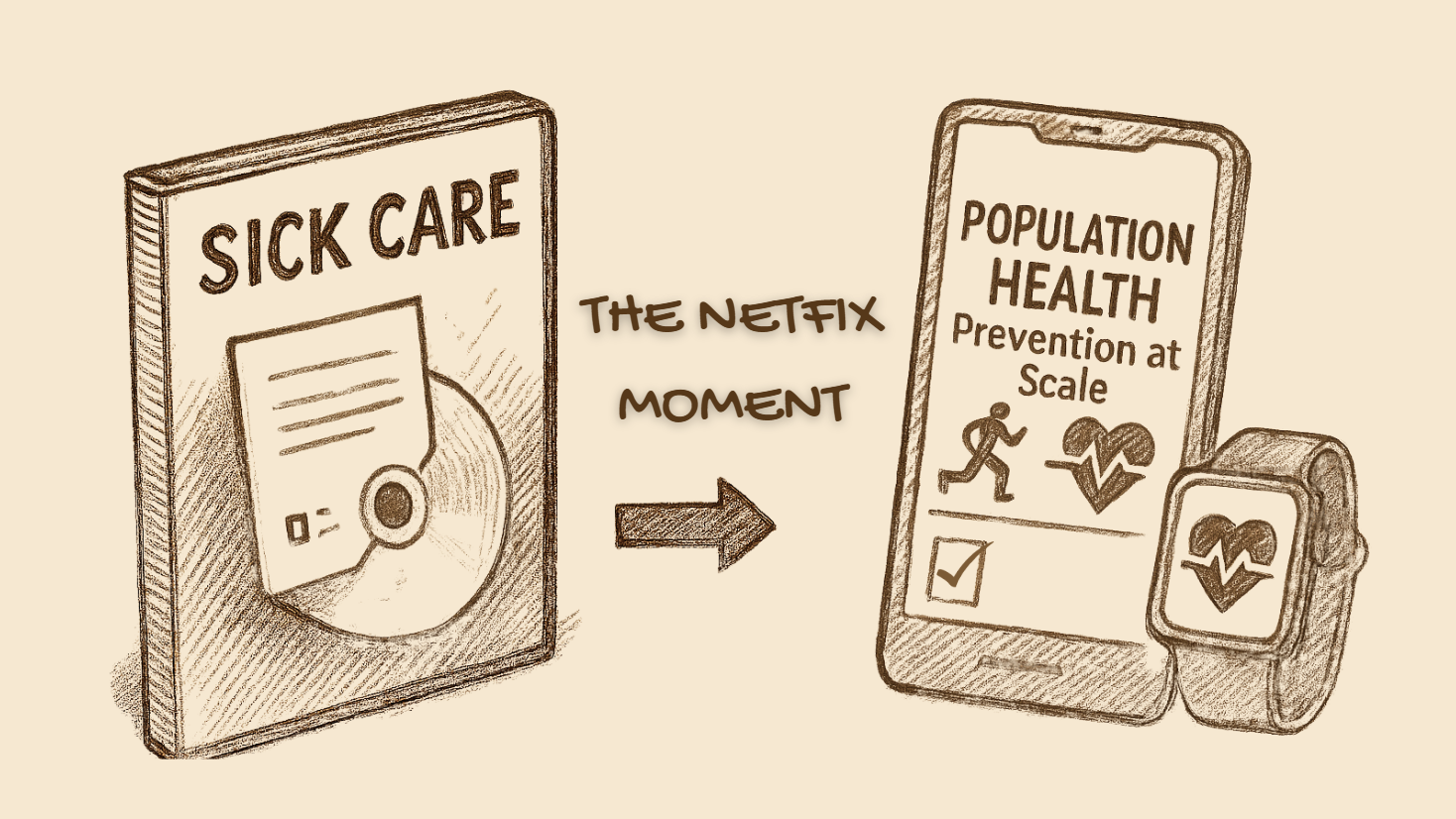
From blockbuster (one CD per person), to scale
The #Ramyfications: From Illness Profits to Wellness Economies
The future of healthcare lies in ethical revenue models where populations are kept healthy. Digital health provides the scale, value-based care provides the alignment, and capitated full-risk models provide the sustainability.
Healthy individuals should not be seen as lost revenue, but as the foundation of a sustainable healthcare economy. The money flows differently: from subscriptions, capitated payments, employer wellness budgets, and government prevention programs. Providers are not punished for reducing hospital visits; they are rewarded.
The question is not whether this pivot will happen, but how fast. Healthcare systems that cling to illness-based revenue will struggle. Those that embrace wellness-driven models will thrive. In this future, population health is the business model; personalized medicine is the value proposition.