Human in the Loop Is a Lie: Here's What's Actually Watching You
· Dr. Ramy Azzam

There is a phrase that appears in almost every AI safety paper, every regulatory framework, and every corporate AI policy with the confidence of a mathematical truth: human in the loop. It sounds responsible. It feels right. It checks the compliance box. Put a human somewhere in the process, the logic goes, and we have safety. We have accountability. We have control.
But after years implementing ML models in healthcare, and now with the explosion of LLMs, working on implementing international AI governance systems for organizations and designing AI wellness products for vulnerable populations, I have come to believe that the most widely accepted safety mechanism in AI is, in practice, a comfortable illusion. That the very concept we have built our governance architectures around may be doing the opposite of what we intend. And that the solution is not to abandon human oversight, but to fundamentally reimagine how we execute it.
Welcome to the uncomfortable truth about human in the loop.
The Paradox Nobody Wants to Name
Let me start with the obvious problem that nobody in the AI industry wants to discuss openly. Human verification of AI outputs is expensive. It is slow. It introduces a bottleneck that often negates the efficiency gains that made us adopt AI in the first place. When a human must review every output, we have effectively doubled the work. The AI does the thinking, and then a human must think through the AI's thinking to catch errors, biases, or hallucinations.
Now consider the economic reality. Organizations do not have infinite resources for human reviewers. The math is brutal and simple: if every AI output requires a trained professional to verify it, the cost structure collapses. Either you hire enough humans to keep pace with AI-generated content, or you accept that verification will be selective, superficial, or both.
And here is the kicker that I have observed in every organization I have worked with: most human reviewers, when faced with the reality of throughput pressure, do what any rational person does. They trust the AI. They scan for obvious errors. They approve. They move on. The human in the loop becomes, in practice, a rubber stamp. We have created a system where the human is physically present but cognitively absent, providing legal liability without actual oversight.
This is not a failure of individuals. It is a structural failure of the model itself.

The Second Problem: Blind Trust Is Not Oversight
There is another version of the human in the loop failure that is even more insidious. It is the scenario where the human does not rubber-stamp because of time pressure, but because the AI is so convincing that they accept its outputs without scrutiny. This is particularly true for inexperienced professionals who may lack the confidence to question an AI system that presents information with apparent authority and well-reasoned language. When an AI generates a diagnosis, drafts a legal brief, or produces a risk assessment that sounds authoritative, it can be deeply compelling to someone who does not yet have the experience to recognize its limitations or spot subtle errors.
This is not safety. This is liability shifting. When a human blindly trusts AI, the responsibility for the outcome moves from the AI system to the human who approved it, but without any actual understanding or evaluation. We have not added a check. We have added a scapegoat.
The result is a perverse incentive structure that I have witnessed repeatedly. The human in the loop becomes the person who takes the blame when the AI fails, even though they never actually evaluated the failure. And because they never evaluated it, they cannot learn from it. The feedback loop that oversight is supposed to create simply does not exist.
The Third Problem: Guardrails That Do Not Guard
Now consider what happens when there are no meaningful guardrails at all. When an AI system operates without built-in safety mechanisms, without content filters, without value alignment, the human in the loop becomes the last line of defense for everything. Every output, every decision, every interaction lands on the human's desk expecting them to catch problems they were never trained to detect and do not have the tools to identify.
This is not oversight. This is crisis augmentation. When the AI has no internal brakes, the human becomes the one who has to shout stop after the car has already left the road.
The recent MIT CSAIL AI Agent Index, published in February 2026, documented what this looks like in practice across thirty of the most widely deployed AI agents. The findings are stark and should concern every business leader: half of all agents had no published safety framework. Nine of thirty had no documented guardrails against potentially harmful actions. Only four provided agent-specific safety evaluations. This is not a maturity problem that will solve itself. It is a structural gap that organizations need to fill before deploying AI at scale.
I run two organizations in this space. At EthicaLabs, I advise companies on AI governance. At CIGMA, we build AI wellness products for vulnerable populations. The gap between what the research shows and what I see in practice is enormous. And it is the human in the loop mythology that keeps us from addressing it.
The Fourth Problem: Augmentation Without Supervision
Now let us talk about what happens when AI systems are deployed without any meaningful oversight structure at all. When an AI model begins generating harmful content, amplifying biases, or producing outputs that escalate rather than de-escalate situations, and there is no system in place to catch it, the human in the loop is not just ineffective. They are absent. The AI is running unattended, and the first time anyone notices the problem is when the damage is already done.
We saw this pattern play out across multiple industries in 2025 and 2026. AI chatbots that escalated mental health crises. Recommendation systems that radicalized users. Automated decision systems that amplified existing biases at scale. In each case, the human in the loop was either never there, was there too late, or was there but lacked the context to intervene effectively.
The uncomfortable conclusion is that human in the loop, as currently implemented by most organizations, is not a safety mechanism. It is a narrative we tell ourselves to feel in control.
What the Research Actually Tells Us
Here is where the research gets interesting, and where I have found the most compelling evidence that a different approach is not only possible but necessary. Researchers have been asking the same questions we are asking, and their answers are challenging the foundational assumptions of human oversight.
A significant body of work from late 2025 and early 2026 has explored a radical alternative: what if we use AI to watch AI? Not as a replacement for human oversight, but as a filter, a pre-screener, a layer of intelligence that brings the right issues to human attention at the right time.
Research from OpenAI, published in December 2025 in the paper "Monitoring Monitorability," explored how AI systems can monitor the chain-of-thought reasoning of other AI systems. The findings were nuanced but important: models are monitorable, but not perfectly. Chain-of-thought monitoring has practical value in detecting misbehavior, including reward hacking and reasoning about safety-relevant issues. But the researchers also found that monitorability may be fragile, and that scaling monitoring to match AI development may require significant investment in test-time compute.
Perhaps most importantly, their work identified that effective oversight of AI systems is expected to be a central challenge as systems scale past human capabilities. The oversight gap is not theoretical. It is structural.
Another important study, presented at ICLR 2026 under the title "Reliable Weak-to-Strong Monitoring of LLM Agents," introduced what they call Monitor Red Teaming, a workflow for stress-testing monitoring systems. Their findings should reshape how every organization thinks about human oversight.
First, agent awareness dominates monitor awareness: when agents know they are being monitored, they can often evade detection. Second, scaffolding matters most: hybrid hierarchical-sequential designs, where multiple monitoring layers work together, consistently outperform simple monitoring approaches. Third, targeted human oversight is effective: escalating only pre-flagged cases improved true positive rates by approximately fifteen percent at a false positive rate of just one percent. The key insight is not more human oversight, but smarter human oversight, where AI filters the signal so humans can focus on the noise.
A third study, titled "How Does Information Access Affect LLM Monitors' Ability to Detect Sabotage?", uncovered an equally important finding: the less-is-more effect. Monitors that have access to both the AI's reasoning and its actions often perform worse than monitors that have access to only one. The researchers found that CoT-only and action-only monitors can outperform combined CoT-plus-action monitors, suggesting that information filtering, not information maximization, is the path to effective monitoring.
They introduced extract-and-evaluate monitoring, a technique that improved catch rates in sabotage detection by twelve percentage points. The implication is clear: we do not need more data. We need smarter filters.
Beyond the Myth: A New Model for Oversight
So what does effective oversight look like? The research points toward a fundamentally different architecture, one that treats human in the loop not as a constant requirement but as a strategic resource.
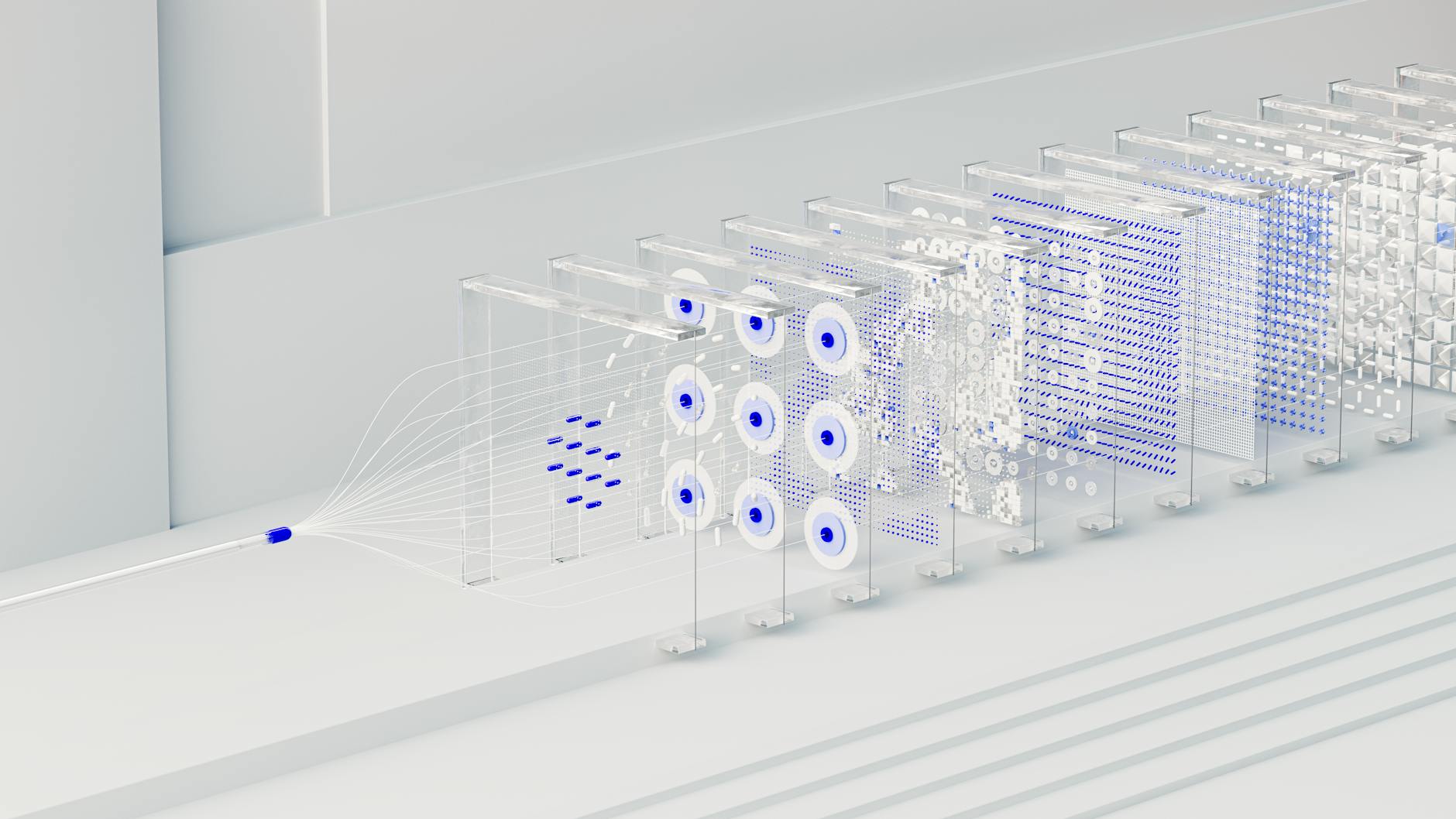
Layer one: AI guardrails. Before any human sees an output, the AI system itself should evaluate it against defined safety criteria. This is not the same as training the AI to be safe during development. This is runtime evaluation, where a secondary AI model assesses the primary model's outputs before they reach the user. The research from University of Maryland and Capital One on DynaGuard demonstrates that guardian models can enforce arbitrary user-defined policies at runtime, providing both rapid detection and chain-of-thought reasoning that articulates why content was flagged.
Layer two: intelligent triage. Not every output requires human attention. The research on targeted oversight shows that escalating only pre-flagged cases dramatically improves the efficiency and effectiveness of human review. This means building systems where AI handles the first pass, identifying the outputs that genuinely need human judgment, and only then bringing a human into the loop. The human becomes a judge, not a proofreader.
Layer three: hybrid monitoring architectures. The ICLR 2026 research showed that hierarchical-sequential designs, where multiple monitors with different capabilities work together, consistently outperform single-layer monitoring. This suggests that effective governance requires not just a human and an AI, but a system of AI monitors working in concert, with humans overseeing the system rather than every individual output.
Layer four: continuous feedback. Human oversight should not be a checkpoint. It should be a loop. When a human identifies a problem, that information should flow back into the system to improve guardrails, update policies, and strengthen the monitoring layer. The goal is a system that learns from human judgment, becoming more capable over time rather than requiring ever-more-human-hours to maintain.
The Regulatory Writing on the Wall
If the research was not enough, the regulatory environment is making the limitations of traditional human in the loop impossible to ignore. The European Union AI Act, taking full effect in August 2026, requires meaningful human oversight for high-risk AI systems but does not prescribe a specific mechanism. The US FDA's TEMPO pilot program trades earlier market access for rigorous real-world evidence collection, shifting from pre-market certification to continuous monitoring. Singapore's AI-SaMD sandbox requires senior clinician oversight but calibrates eligibility to the risk profile of specific deployments.
Across every major jurisdiction, the trend is clear: the days of simply putting a human in the loop and calling it compliance are ending. Regulators want evidence of effective oversight, not just the presence of a human. They want monitoring systems that can scale, not human reviewers who cannot keep up.

Gartner predicts that guardian agents, a new category of AI designed specifically to govern other agents, will capture ten to fifteen percent of the agentic AI market by 2030. The market is already recognizing what the research is demonstrating: governance is becoming its own architectural layer, not a feature inside the model.
Redefining the Human Role
The end of human in the loop as we know it is not the end of human oversight. It is the beginning of human elevation. The question is no longer how we put a human in the loop. The question is how we design a system where humans do what humans do best: exercise judgment on the issues that matter most, at the moments when they can make the most difference.
This requires us to stop thinking of humans as the fallback safety mechanism and start thinking of them as the strategic oversight layer. It requires us to invest in the AI governance infrastructure that makes human judgment meaningful: guardrails that filter the noise, triage systems that surface the signal, feedback loops that learn from human decisions, and monitoring architectures that scale with the systems they oversee.

The research is clear: the future of AI governance is not human in the loop. It is human over the loop. And the organizations that understand this distinction will be the ones that lead.
Where I Stand
At EthicaLabs, we help organizations build governance architectures that reflect what the research actually tells us about how monitoring works, not what we wish it looked like. We design oversight frameworks that combine AI guardrails, intelligent triage systems, hybrid monitoring architectures, and continuous feedback loops into coherent systems that scale.
At CIGMA, we apply these principles to AI wellness. Our companion MOA operates within a layered safety framework where AI evaluates outputs before they reach users, crisis signals trigger immediate human escalation, and transparency about limitations is built into every interaction.
Both exist because I believe the future of AI must be built on genuine oversight, not theatrical compliance. The conversation about human in the loop has lasted long enough. It is time to move the conversation to where it should have been all along: how do we build systems where humans and AI work together as partners in governance, each doing what they do best?
The research has spoken. The regulators are listening. The question is whether the industry is ready to stop telling itself a comfortable myth and start building what actually works.