Quantum Leaps and Stubborn Stalemates: What Max Planck and John Nash Teach Us About the Future of Healthcare
· Dr. Ramy Azzam
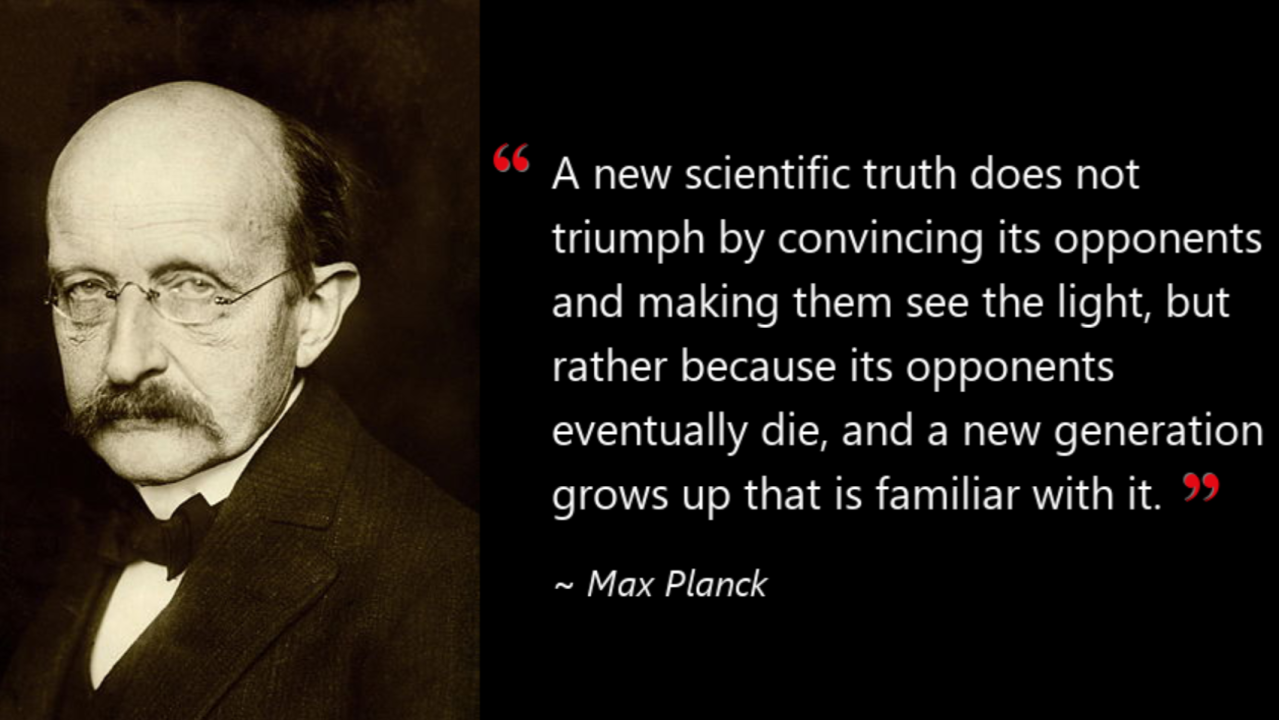
Max Planck and John Nash walk into a hospital.
No, this isn’t the opening line of a particularly nerdy joke, though I’d pay good money to hear the rest of it. Instead, it’s the curious meeting of two historical intellects whose work might just hold the key to understanding the turbulent world of healthcare, and, more specifically, digital health.
Planck gave the world quantum mechanics, cracking open the universe to reveal that reality itself is built from sudden, discrete leaps rather than smooth continuums. Nash, on the other hand, laid bare the peculiar logic of human strategy, showing how rational players can trap themselves in patterns that benefit no one.
Healthcare today finds itself precisely at the intersection of these two insights. On one side lies the disruptive potential of digital health, artificial intelligence genomics & omics, wearables keeping tabs on chronic conditions. On the other side stand entrenched systems, institutional inertia, and professionals who’d rather cling to familiar ways than risk plunging into the unknown.
I saw a correlation and confirmed it by running it through AI. In this article, I try to explore what happens when Planck’s world of quantum leaps collides with Nash’s world of strategic stand-offs. A trip through physics, mathematics, human psychology, and the everyday realities of hospitals and clinics…
Max Planck and the Quantum of Change
In 1900, Max Planck found himself wrestling with a problem that refused to yield to classical physics. Black-body radiation was producing results no one could explain. In a moment of genius, or perhaps desperation, he proposed that energy wasn’t a smooth flow, but came in tiny, discrete packets he called quanta. At first, Planck himself thought it was little more than a mathematical trick. But as evidence accumulated, it became clear he’d accidentally opened the door to a new understanding of reality. The universe, it turned out, didn’t operate on smooth gradients but on sudden jumps.
This radical notion eventually gave us lasers, semiconductors, MRI machines, and, indirectly, the smartphone in your pocket. But Planck’s insight travels far beyond physics and explains how profound innovation often arrives in sudden, jarring leaps rather than gentle evolution. Yet, as Planck himself famously observed,
“A new scientific truth does not triumph by convincing its opponents but because its opponents eventually die, and a new generation grows up that is familiar with it.”
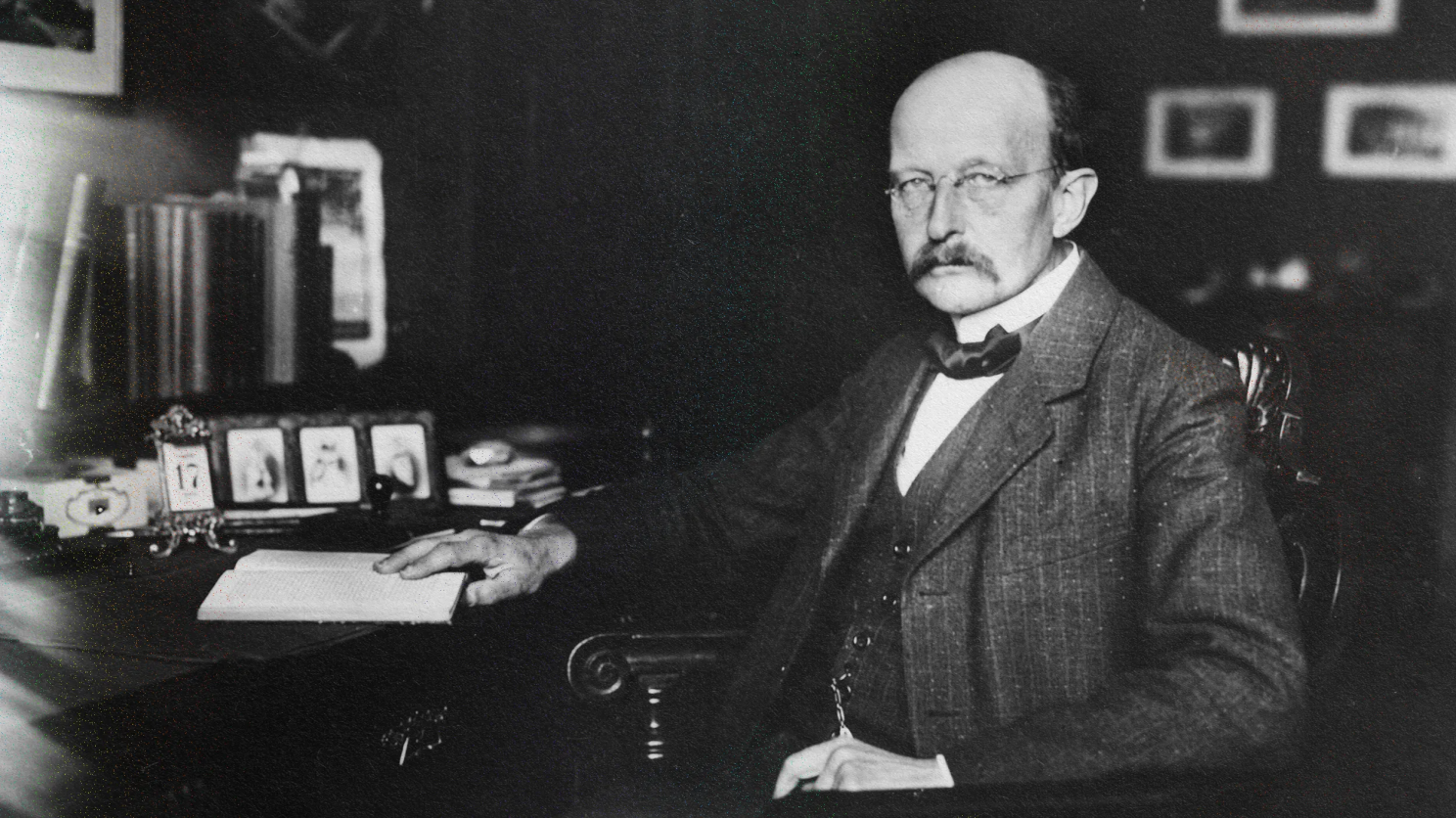 Max Planck gave us quantum mechanics
Brutal, but painfully accurate. In any field, and particularly in healthcare, brilliant new ideas often slam straight into walls of human resistance, institutional inertia, and cultural habit.
Healthcare has experienced its share of Planck moments. Evidence-based medicine toppled centuries of dogma and anecdote. Paper charts, once the sacred scrolls of medicine, gave way to electronic health records, despite groans from physicians lamenting endless clicks. Value-based care emerged to challenge the long-held belief that more medications equate to faster outcomes. And now, AI and digital health technologies are questioning everything from clinical workflows to the very definition of a doctor’s role. Each of these moments didn’t merely require better technology; they demanded the courage to push past cultural and structural barriers.
Nash Equilibrium – When No One Wants to Blink First
Leap forward about half a century, and we meet John Nash, whose brilliant mind would eventually be immortalized on the silver screen in “A Beautiful Mind.” Nash introduced the world to a deceptively simple but profound idea: the Nash Equilibrium.
In essence, it describes a situation where no player in a strategic game can improve their outcome by changing their behavior, assuming everyone else stays put. This sounds tidy and logical, and sometimes it is. But it’s also why human systems, including healthcare, can stay frozen in patterns that are clearly suboptimal for everyone involved.
 John Nash gave us Game Theory and inspired the movie "Beautiful Mind"
Think of two drivers stuck in a narrow alley, each refusing to reverse for fear of looking weak. In Nash’s world, people make the best decisions they can based on what they expect everyone else to do. The result is a kind of stasis, where progress grinds to a halt, not because people don’t see a better way forward, but because the risk of moving alone is simply too great.
Sounds too familiar?
Healthcare has been a perfect laboratory for observing this in action. The tug-of-war between fee-for-service and value-based care. Doctors and hospitals continue to earn more by performing more procedures, even when everyone, from insurers to patients, knows that paying for outcomes would likely yield better results and lower costs. The talk about shifting to value is endless, but the actual shift often feels glacial because no single stakeholder wants to be the first to absorb the risk.
Data silos are another textbook example. Hospitals and health systems guard patient data fiercely, vendors construct walled gardens to keep competitors at bay, and payers struggle to piece together a coherent patient story. Everyone understands that sharing data could improve outcomes and reduce waste, but no one wants to hand over their competitive advantage. And so the system sits, trapped in a Nash equilibrium of mutual mistrust.
Digital health adoption faces similar dynamics. Physicians worry about liability, disruptions to their workflow, and losing professional autonomy. Hospitals fret over return on investment. Regulators fear unintended consequences. Patients worry about privacy breaches or being treated by machines instead of humans. The result is a world brimming with pilot projects and press releases, but still waiting for widespread transformation.
When Quantum Leaps Meet Equilibrium Locks
The real tension, and, frankly, the drama, occurs where Planck’s paradigm shifts crash headlong into Nash’s strategic stalemates. Let’s bring this out of the abstract with some concrete examples.
Telemedicine is a prime case study. Before 2020, it existed mostly as an afterthought, the domain of innovators and a few pioneering physicians. Doctors worried about reimbursement and legal risks. Patients preferred face-to-face encounters. Insurers feared an explosion of unnecessary virtual visits. The entire ecosystem was locked in a quiet Nash equilibrium: everyone agreed telemedicine was interesting, but no one felt compelled to lead the charge.
Then the COVID-19 pandemic happened, a Planckian shockwave if ever there was one. Practically overnight, regulators relaxed decades-old restrictions, insurers opened their wallets, and both doctors and patients discovered that virtual care was not only possible but, in many cases, preferable. The payoff structures shifted dramatically, and a new equilibrium emerged. The challenge now is whether this new equilibrium will stick or whether the system will revert to its old ways.
Digital therapeutics provide another fascinating intersection of these two worlds. The idea that an app can treat insomnia, ADHD, or chronic pain represents a true quantum leap in how we define medicine itself. Yet adoption has been painstakingly slow. Pharmaceutical companies worry about cannibalizing their own drug sales. Providers feel uneasy about integrating digital treatments into familiar care pathways. Payers want solid proof that these interventions work before reimbursing them. Patients, meanwhile, are hesitant to accept an app as a substitute for traditional medicine. The entire system hovers in a delicate equilibrium where everyone’s waiting for someone else to go first.
Ethics, Governance, and Playing a New Game
Planck’s story reminds us that scientific revolutions often demand new ethical frameworks. Quantum mechanics rattled our assumptions about determinism and reality itself. Likewise, artificial intelligence is shaking up long-held beliefs about privacy, transparency, and fairness. What does informed consent look like when an AI system is making recommendations we can barely explain? Who owns the data produced by a wearable device strapped to your wrist? How do we prevent digital innovations from deepening existing health disparities rather than bridging them?
Nash adds another dimension to the ethical puzzle. Ethics, it turns out, is often a strategic calculation. Hospitals may want to share data for the greater good but fear handing a competitive edge to rivals. Tech companies know transparency is important but worry that opening up their algorithms will expose proprietary secrets. Each actor’s hesitation is entirely rational, but collectively, it keeps the system trapped in an ethical equilibrium where the right thing to do remains undone.
 Upholding ethics is not idealistic, it's pragmatic
The way out lies in crafting incentives and frameworks that make ethical behavior the smart choice. Regulations that reward transparency, public reporting that builds trust, and collaborative agreements on standards can all shift the payoff structure. When behaving ethically also serves stakeholders’ strategic interests, real change becomes possible.
Leadership, The Ultimate Quantum Catalysts
Neither Planck’s brilliant equations nor Nash’s elegant game theory can deliver change alone. Ultimately, transformation depends on leadership, the human spark that connects new ideas with practical reality.
Great leaders possess the vision to see genuine paradigm shifts before others do. They recognize when innovations represent more than technological novelty and grasp their potential to redefine entire systems. Planck reminds us that it sometimes takes a new generation to fully embrace new truths, but wise leaders help accelerate that generational shift.
Equally important is strategic acumen. Leaders who understand Nash’s world know that moving first can be risky unless the entire game is redesigned. They work to map stakeholders’ incentives and to engineer pathways, through pilot programs, shared risk models, or collaborative alliances, that make embracing change the rational choice for everyone.
Change is unsettling, and healthcare professionals, patients, and industry partners all have legitimate fears. Leaders must listen deeply, co-create solutions, and ensure that technology remains firmly in service of human beings, rather than the other way around. Trust is the secret ingredient that makes paradigm shifts possible.
Progress demands that we master both the science of possibility and the strategy of persuasion. We must learn to spot the quantum leap, diagnose the equilibrium, design the incentives, and above all, lead with empathy and trust.