Let's talk about SaaS: Sport as a Service
· Dr. Ramy Azzam
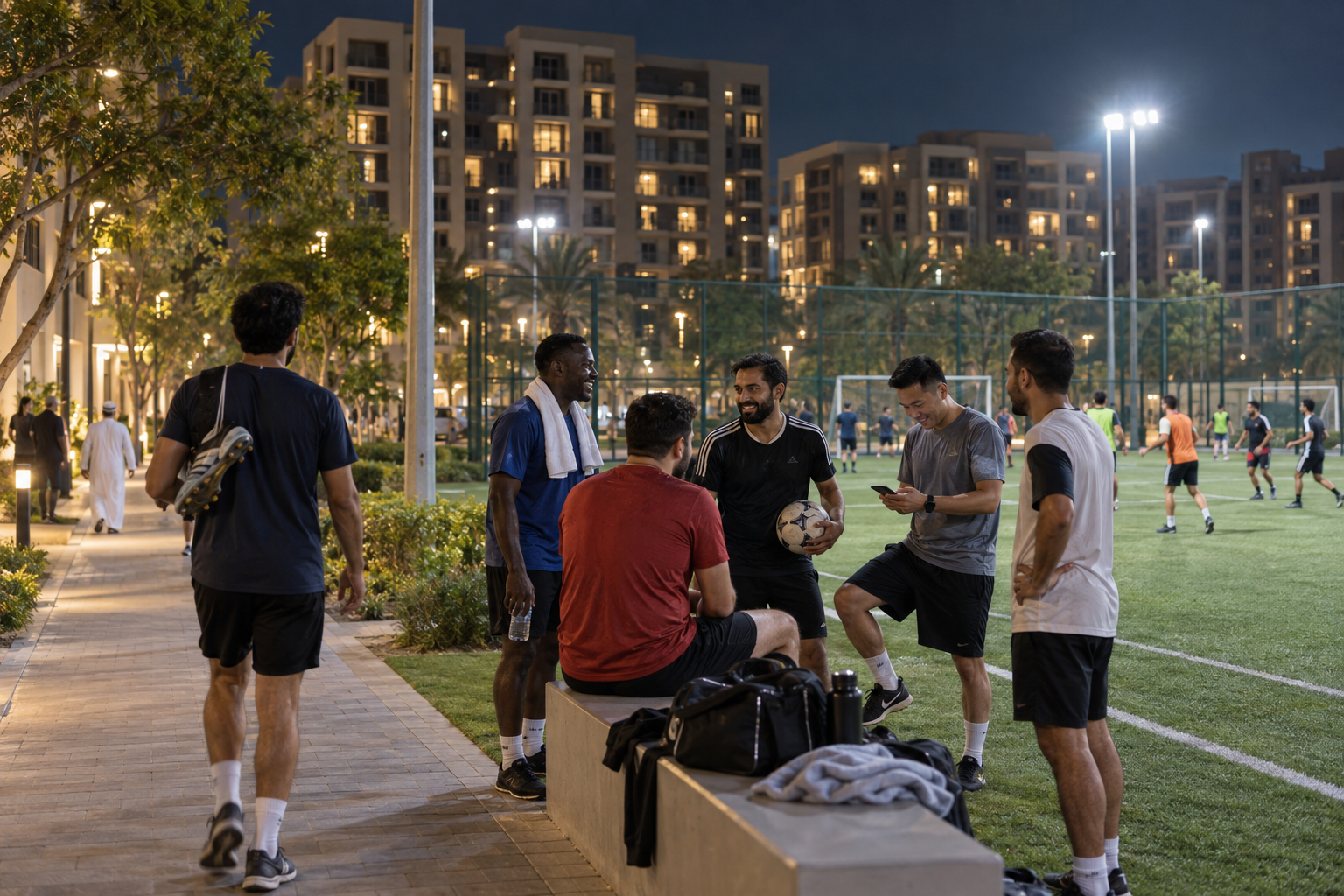
On 23 September 2026, the United Nations hosted a discussion about artificial intelligence, human development, connection and belonging. I watched part of it after another evening on a football pitch, and I kept thinking about the people I had just played with, and how organising a game had gradually become a reason to build our evenings around one another.
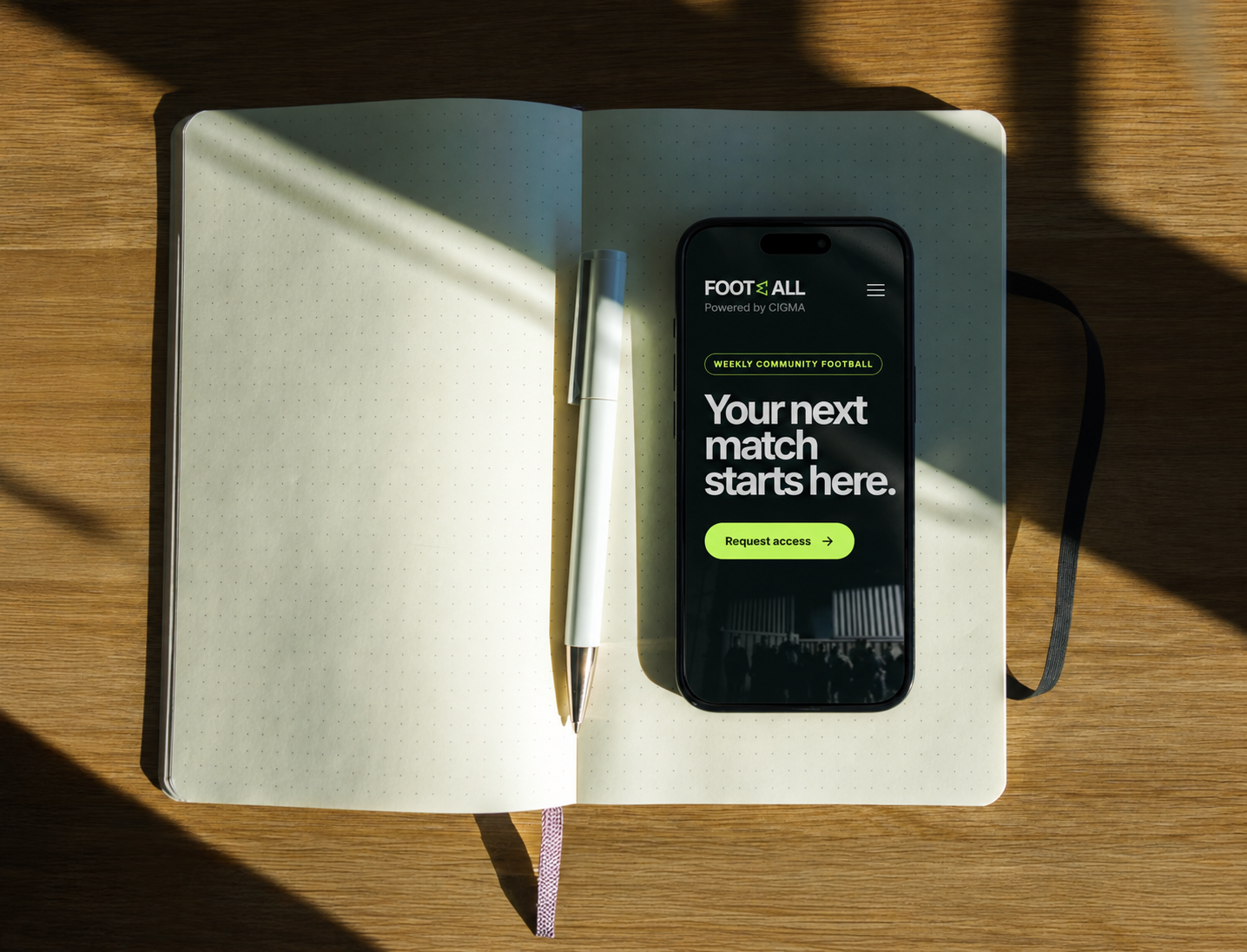
Around the 2026 World Cup, I created a football flavour of CIGMA for the community forming around our games. The first needs were practical. Who is playing tonight? Which position does each person prefer? How do we sort the teams, share the location, organise the journey and contain the inevitable message chain confusion before kick-off?
Then the community became the larger story.
I now go every night because I enjoy the football, the movement and the satisfying proof that my sweat glands remain committed to their work. I also go because I enjoy the people. We talk before the match, joke after it and have become good friends through the simple act of returning to the same place.
I have started calling the idea Sport as a Service. It is a local health service built around a recurring game, an accessible place, familiar faces and a careful technology layer. The match creates the reason to gather. CIGMA helps the community organise, gives each member private tools for reflection, and helps us learn what could make the experience easier to join and worth repeating.
From World Cup Energy to a Nightly Rhythm
Big tournaments generate a burst of attention. A February 2026 smartwatch study of 229 German cup-final fans found device-estimated fever (excitement) averaged 41% higher on match day than on ordinary days. It measured spectators' short-term response. Flags and group chats eventually settle; a healthy community needs a rhythm that survives the final whistle.
Our rhythm is an evening game that gives the week shape, and gives people a place to be. An absence becomes visible. A new player has an easy subject for conversation. Friendship develops without the pressure of arranging a formal social occasion, which is useful because adults can turn coffee into a diary negotiation lasting longer than some international treaties.

When a Match Changes Where Somebody Lives
One member of our group actually moved into the community so he could walk to football instead of driving. And thinking of this hoestly give me goosebumps. That decision says more about the value of the service than a polished engagement dashboard ever could. The game had become part of how he wanted to live.
Btw, you are welcome real estate developer. Where is my commission?
But it all makes sense. A study published in Frontiers in Public Health on 9 September 2026 examined 5,451 respondents in China. Structured exercise and watching live sport were associated with happiness, with neighbourhood social connection acting as one pathway. The survey was cross-sectional, so it cannot prove that sport caused happiness. It does support a useful operating question: does an activity help people build repeated, local ties?
The World Health Organization's Commission on Social Connection has placed social health alongside the major concerns facing health systems and communities. Loneliness has causes that reach far beyond one activity. A nearby football game can still create a dependable place where recognition, conversation and shared effort happen often enough for trust to grow.
Longevity research gives this question a longer horizon. A July 2026 scoping review of 124 studies on people who lived beyond 100 found recurring links with moderate movement, strong social networks, resilience and purpose, while warning that observational evidence cannot prove a formula for long life. The practical goal is healthspan: years lived with function, agency, connection and meaning. Football cannot promise extra years. A community people enjoy returning to can make several healthspan-supporting behaviours easier, can.
The Six Layers of Sport as a Service
The service we created has six layers.
Access comes first because location, cost, timing, ability, transport and heat decide who can take part. An unreachable programme is a brochure.
Rhythm turns an occasional activity into part of life. A regular fixture brings people back. Coordination removes friction through fixtures, squad status, positions, private match links, travel plans and reminders.
Belonging grows around the game. Conversation carries much of the social value. Shared mistakes help too. Few things flatten professional status faster than sending an easy pass directly into touch.
Private reflection lets members record how they are doing through mood check-ins, mood history, journals and MOA. These tools belong to the member. Matching bibs grant no automatic access to somebody's inner life.
Learning and adaptation closes the loop. With consent and safeguards, community patterns can sit beside direct feedback. We can see where participation drops and ask better questions about timing, travel, welcome, format and support.
Technology Must Earn Its Place
CIGMA's football experience gives organisers and members one protected home for fixtures, squad availability, positions, travel, chat, challenges, circles and time-limited activity beacons. Private wellbeing tools sit in the same environment. The technology reduces the effort around participation and supports reflection afterwards.
The product should remain quiet when the community knows what to do. A good pass needs no digital transformation strategy. The platform becomes useful where a person might drop out: unclear details, a difficult journey, an awkward first visit or nobody noticing an absence.
Iteration then becomes concrete. We might change the match time, simplify booking, share travel, create a gentler format or improve the welcome. Data points towards a question. Conversation tells us what the numbers missed.
Measurement Without Surveillance
Wellbeing measurement needs a clear boundary. Members can choose to record mood, reflections and participation. Mood and journal entries remain private unless shared, and wellbeing insights can be switched off. Carefully handled organisation-level measures can help us understand how the service is used. Optional wearable trends could eventually help a member notice patterns in sleep or recovery around match nights, provided that member chooses to use them.
Those signals do not prove that football changed mental health. A July 2026 review of team sports and adult mental health found inconsistent effects, although selected psychosocial outcomes, wellbeing and social connection showed promise. Clinical claims need stronger evidence.
A September 2026 study of outdoor sport also linked embodied experience, flow, emotional value and community belonging with a sense of meaning. Its sample was mainly young men aged 21 to 30, and the results were correlational. The findings can guide questions and tests. Clinical outcome claims require dedicated evidence.
Responsible technology protects this difference. It can help a person notice a pattern and help a community improve its service. It must keep private reflection private, make consent real and leave room for people to enjoy a match without feeling that every breath has joined a dashboard.
A Service for Places and People
Sport as a Service could work in residential developments, universities, workplaces, sports clubs and neighbourhoods. Each setting would need its own answer to safety, access, inclusion, privacy and local culture. The transferable unit is simple: a real recurring activity, a community that owns the experience and a responsible operating layer that helps people keep returning.
It could also become part of social prescribing. The World Health Organization describes social prescribing as connecting people with suitable community support for their health and wellbeing. In my work as Senior Clinical Advisor to SPAN UAE, I see how a link worker or wellness navigator can turn a conversation about what matters into a practical connection. A football community could be one option, with follow-up on access, confidence, safety and continued attendance. Other people will need walking, gardening, creative activity, volunteering or peer support. The pathway begins with the person.
The model also changes how we think about value. Attendance matters. So do friendships, walkability, the confidence to join, the ease of returning after an absence and the feeling that a place contains people who know your name. Some of these outcomes can be measured. Others need patient observation and honest conversation.
I built CIGMA because wellbeing grows through daily life. Our football community is giving that belief a very practical test. Every evening brings exercise, sweat, minor tactical disputes, terrible jokes and another chance to learn what helps a healthy community hold together.
The #Ramyfications Worth Holding Onto.
Healthy communities grow when people have a nearby reason to return. Football supplies movement and shared purpose. Walkability makes attendance easier. Familiar faces turn repetition into belonging and help protect healthspan.
Technology can support that system by removing friction, protecting private reflection and helping the service learn. Its success appears on the pitch and around it: people arrive, stay, laugh, notice one another and come back tomorrow.