The Digital Native's Dirty Secret: A Millenial's Perspective
· Dr. Ramy Azzam
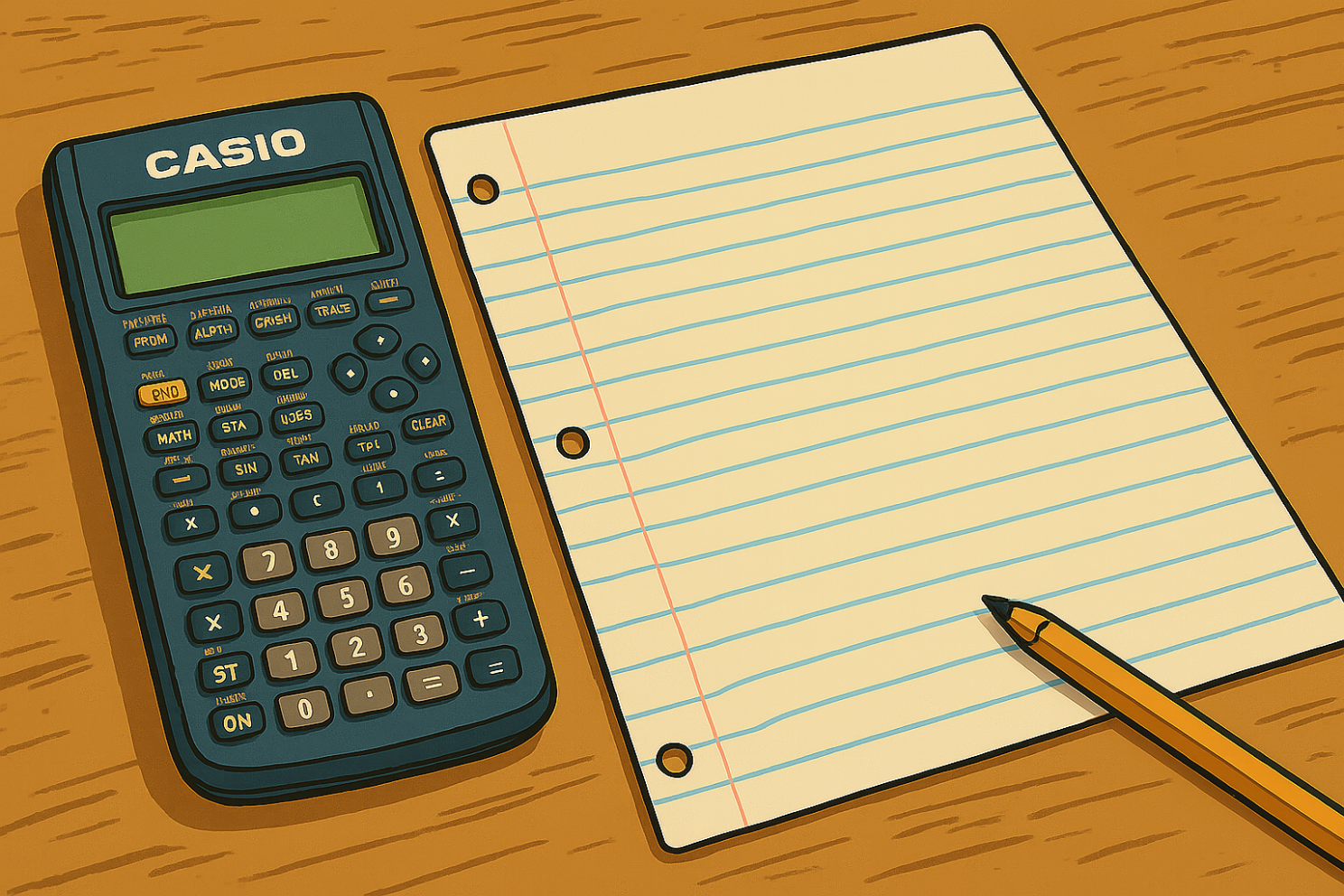
Picture yourself in a 1990s math classroom. You walk in with three essential tools: a calculator, a sheet of paper, and a pencil. The calculator handles the computational heavy lifting, solving equations and calculating square roots with lightning speed. But the real thinking happens on paper, where you sketch out problems, test different approaches, and work through the logic step by step. No matter how sophisticated your Texas Instruments device, it couldn't replace the fundamental cognitive work of problem-solving.
This same principle defines our relationship with artificial intelligence today, though most people haven't realized it yet.
The Calculator That Changed Things
Let me be clear from the start: I remain deeply bullish about AI's transformative potential. We're witnessing a technology that will disrupt vast portions of modern work, automating tasks that frankly shouldn't require human intelligence in the first place. The speed of AI advancement reveals just how routine and algorithmic most of our daily work has become.
But my focus here is on LLMS and why they are calculators and not agents.
Early calculators were revolutionary for their time. They could handle arithmetic effortlessly, compute logarithms, and even solve quadratic equations if you input the right sequence. Yet they had fundamental limitations that mirror today's large language models in striking ways.
Once you cleared a calculator's screen, everything vanished. Similarly, while ChatGPT and Claude can maintain context within a conversation, they lack persistent memory across sessions. Building truly integrated systems with long-term memory remains computationally expensive and prone to generating occasional nonsense. They're not yet the "second brain" that many promised.
Calculators excelled at discrete, well-defined tasks: enter numbers, receive results. LLMs follow the same pattern, phenomenally fast at specific tasks like summarizing documents, generating code snippets, or crafting responses. But like those 1990s calculators, they depend entirely on human input. They don't know your intent unless you specify it clearly.
They remain tools, not thinking partners.
 Your brain needs a blank canvas
The Cognitive Cost of Over-Reliance
You've probably heard of or read the recent research from MIT's Media Lab, that reveals the hidden danger of AI dependence. When participants wrote essays with ChatGPT's assistance, brain scans showed significantly lower activity in regions linked to creativity, memory, and executive thinking compared to those working alone or using traditional research tools like Google Search. The AI-assisted essays were more formulaic and less original. Most troubling, even after AI assistance was removed, participants struggled to recall information and remained cognitively disengaged.
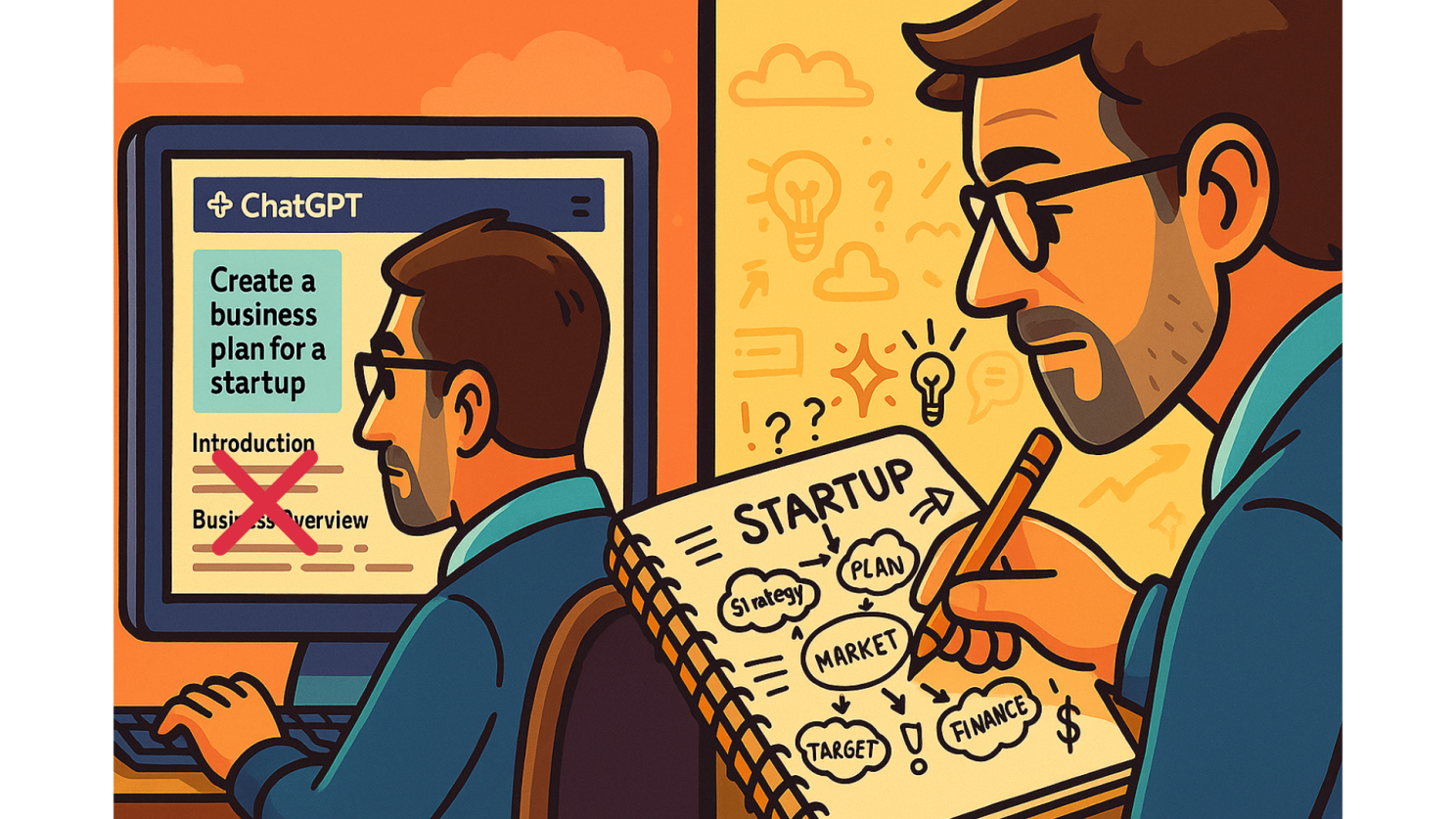
I've witnessed this pattern firsthand in professional settings. Marketing managers ask AI to "write a campaign strategy" without first researching their audience, understanding competitive positioning, or defining success metrics. The result is generic output that sounds sophisticated but lacks the insights that come from deep domain knowledge and creative thinking.
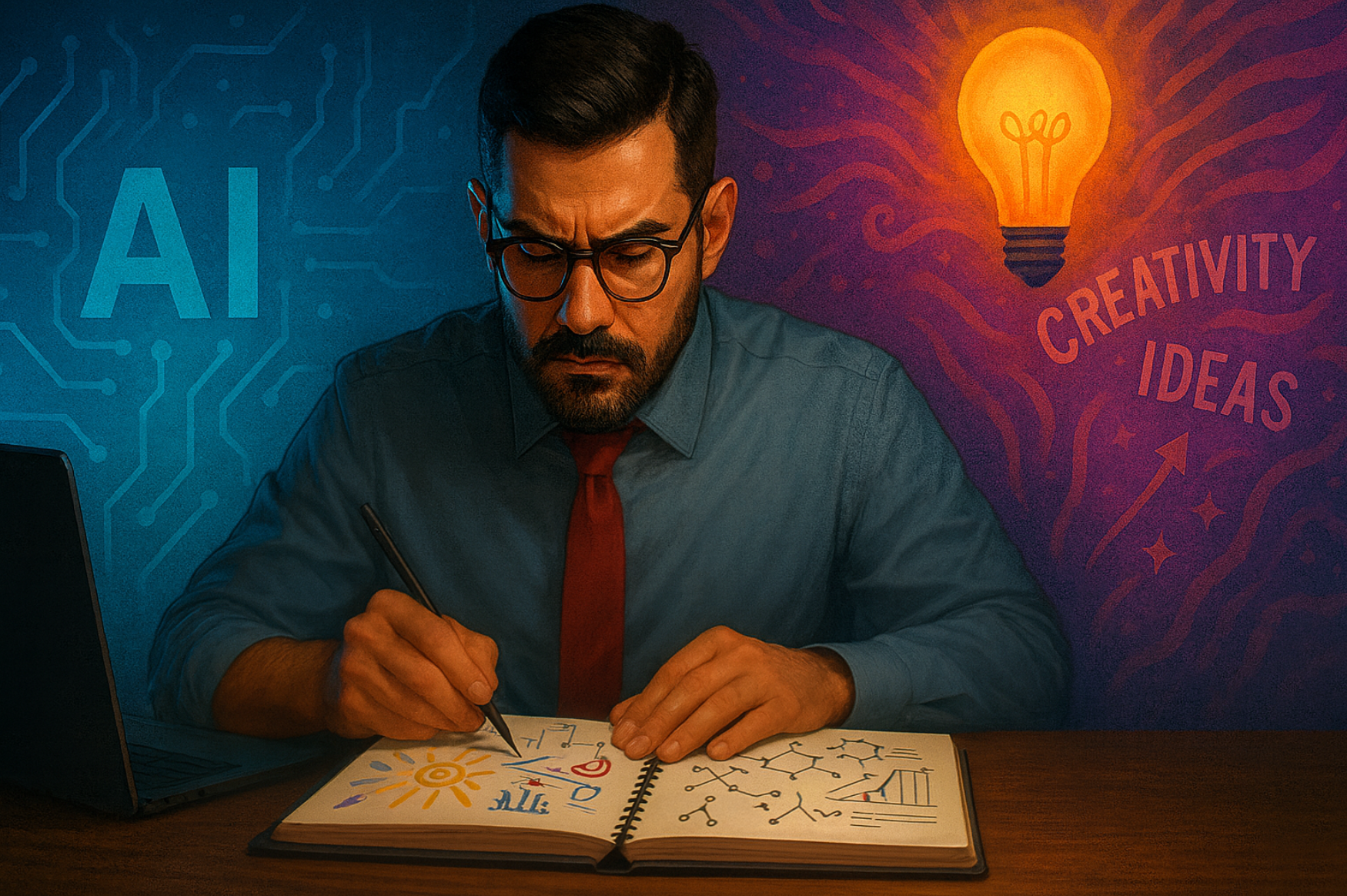
 Doodling (and coloring with my 2 year old) helps
The Irreplaceable Human Element
True innovation emerges from connecting seemingly unrelated dots and questioning fundamental assumptions. Consider Dr. Paul Farmer's approach to healthcare in Haiti. Rather than simply treating individual patients, he recognized that medical interventions would fail without addressing poverty, education, and social infrastructure. This systems-thinking approach, which led to Partners In Health's revolutionary community-based healthcare model, required the kind of creative leaps that current AI cannot make.
Similarly, when Netflix's Reed Hastings decided to pivot from DVD-by-mail to streaming, he wasn't just optimizing an existing business model. He was envisioning an entirely different relationship between content and consumers, anticipating broadband infrastructure improvements, and betting on behavioral changes that hadn't yet occurred. This strategic foresight required understanding technology trends, consumer psychology, and market dynamics in ways that no algorithm could have predicted.
The most impactful work requires space for curiosity, moments of free association, and the ability to challenge conventional wisdom. A public health professional who recognizes that rising diabetes rates aren't just about individual dietary choices but about food deserts, economic inequality, and the absence of safe recreational spaces. A project manager who suggests abandoning a failing initiative entirely rather than documenting it for the fifteenth time. These insights emerge from human experience, empathy, and creative thinking.
Why LLMs are transforming not disrupting
My argument that LLMs are like calculators doesn’t contradict my belief that broader AI models will fundamentally disrupt the modern workplace. The reality is that much of today’s work, even in senior roles, isn’t deeply creative or strategic but revolves around structured processes that AI is increasingly capable of handling.
In healthcare, for instance, clinical work often follows the SOAP process: gathering the patient’s subjective story, performing objective examinations, assessing findings against possible diagnoses, and planning management. Almost every part of this pattern-recognition workflow can, and likely will, be performed by machines, as AI already analyzes symptoms, interprets imaging, and proposes treatment protocols with remarkable accuracy. Yet that’s not the same as true creativity or higher-order problem-solving, which requires challenging assumptions, forging new paths, and understanding root causes in complex systems.
Interestingly, the rise of AI tools also creates opportunities to learn orchestration, a valuable skill rarely taught in traditional education, and even less in medical schools. Knowing how to allocate tasks among different AI models, manage workflows, and integrate diverse outputs fosters sharper judgment, better time management, and strategic thinking. It’s an unexpected but transformative side effect of engaging with multiple AI agents. However, while orchestration is a powerful skill, it can’t replace real-world experience and human judgment.
Digital Tools and Mindfulness
Despite my enthusiasm for AI, here's the paradox: my best ideas almost never come while I'm staring at a screen. They come when I'm driving long distances, taking a shower, exercising, or sitting quietly after a football match.
Why?
These moments are valuable because they disconnect us from digital devices and give our brain space to wander.
Neuroscience research confirms this pattern. Dr. Marcus Raichle's studies on the brain's default mode network show that creativity flourishes during "incubation periods" when you're not consciously focused on a problem but your mind continues working in the background. Physical activity has been linked to higher creativity scores across multiple studies. Boredom, rather than being wasteful, forces the mind to seek novel stimulation and forge new neural connections.
Conversely, constant digital engagement can stifle creativity by overloading working memory, encouraging superficial thinking, and preventing the deep reflection that leads to breakthrough insights. The endless scroll of social media, the ping of notifications, and the temptation to immediately ChatGPT-ing every question robs us of the mental space where original ideas germinate.
But here's the catch that I found spending decades studying and trying to understand human behavior, especially motivation. The key to performing tasks, is not to think of them as tasks but to integrate them naturally into activities (that sometimes you have to do), rather than trying to create entirely separate mindfulness sessions.
For instance, we used to advise patients to deliberately park 10 minutes away from their offices, creating a built-in walking routine, but that rarely worked. But when free parking lots were deliberately designed away from work buildings, this forced individuals to walk between 5 to 10 minutes everyday, and getting some exposure to the sun.
 Long driving hours which I begrudged, helped my brain wander
LLM As A Tool (LAAT)
Until we have GPT-5 in a few days, that is allegedly an AGI (Artificial General Intelligence), think of your LLM as a calculator. Fast, precise, transactional.
Use it for research, drafting, analysis, and routine cognitive tasks. But bring your own canvas, your own ideas, and your own space for deep thought.
When Satya Nadella transformed Microsoft's culture, he didn't rely on AI to generate his strategy. He spent months in quiet reflection, conducted extensive one-on-one conversations with employees, and drew insights from his personal experience growing up in India and his observations about technology's role in democratizing opportunity. The "growth mindset" philosophy that revitalized Microsoft emerged from human wisdom, cultural understanding, and strategic vision that no algorithm could have produced.
AI represents a phenomenal tool for augmenting human capability. But your best ideas still come while driving down quiet highways, standing under a hot shower, or cooling down after intense physical activity, when your mind is finally free to wander and connect. Keep your LLM handy for the computational work. But keep your notebook close too. And don't forget to step away from the screen.
Our brains, just like in the 1990s, still deserve their piece of paper.