The Equalizer That Terrifies the Gatekeepers
· Dr. Ramy Azzam
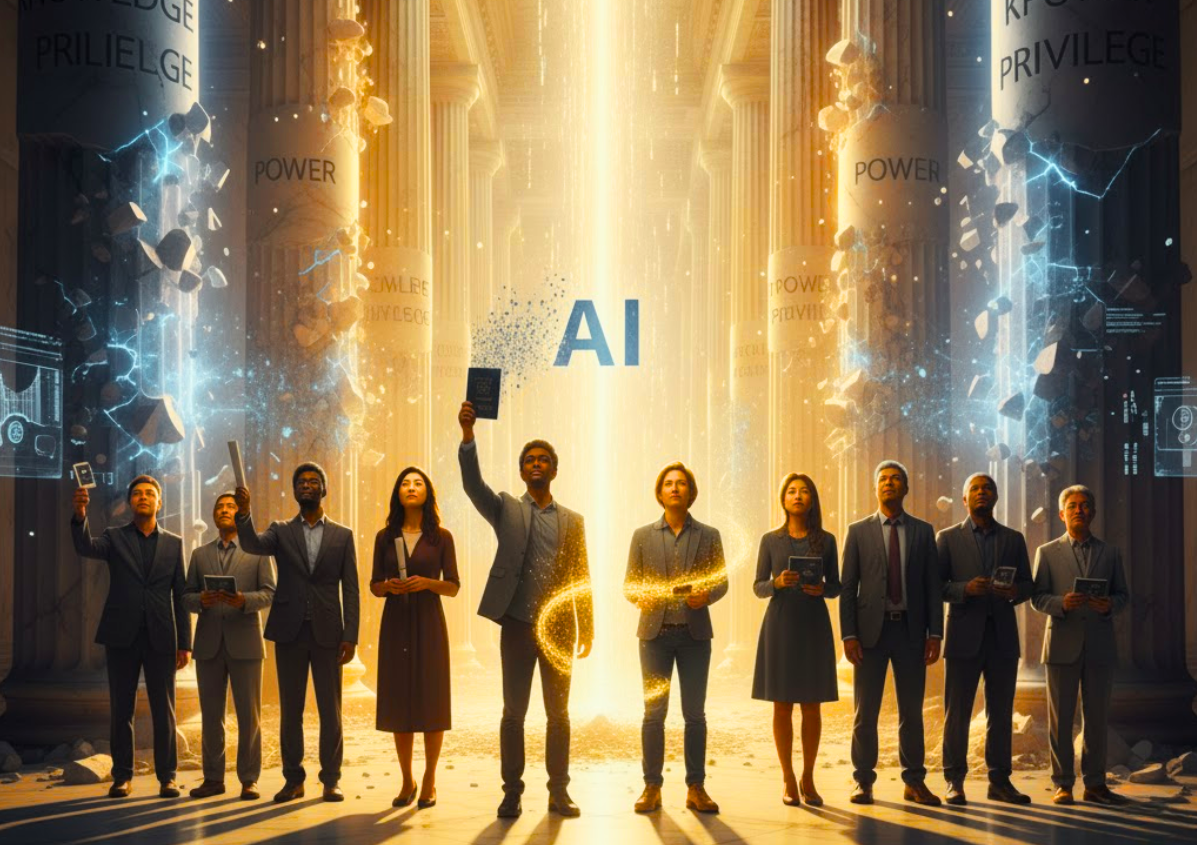
The Fear Behind the Smile
Every time someone says "AI will never replace humans," I hear something else entirely. What they really mean is "I hope AI will not replace me."
It's not a statement of fact. It's a plea.
For decades, a select few built their entire identity around owning knowledge, not creating it, not sharing it, but owning it. They wrote the textbooks, issued the credentials, published the journals, and priced the rest of the world out of access. Knowledge was their private stock exchange. The more exclusive it was, the higher its value.
Then along came large language models, and they kicked the door open. Suddenly, anyone with an internet connection could ask complex questions and get expert-level responses. Overnight, the intellectual aristocracy discovered that their gated gardens were not so special after all.
That's why the tone shifted. First, AI was the savior. Then it became the threat. Then the narrative changed again: "AI is overhyped," "AI is a bubble," "AI will never understand emotion." The talking points multiply, but the subtext remains constant. The elites are not protecting humanity. They're protecting hierarchy.
Knowledge Has Always Been a Controlled Substance
Knowledge has always been treated like a controlled drug. The right dosage could empower. Too much could destabilize.
For centuries, access to education was rationed. Universities decided who was worthy. Corporations decided what information was worth monetizing. Even governments shaped what their citizens were allowed to know.
Technology has always disrupted this arrangement, but never completely. The printing press made books cheap but still required literacy. The internet made information abundant but also fragmented.
AI, however, is different. It interprets knowledge. It synthesizes it. It translates complexity into clarity. And, it's scalable.
That's what terrifies people. Not the technology. The loss of control.
When a teenager in Nairobi can produce a paper that reads like it came out of Harvard, when a factory worker in Manila can design a business model using the same frameworks once locked behind an MBA, when a nurse in Cairo can analyze clinical data without a PhD, the entire illusion of intellectual superiority begins to crumble.
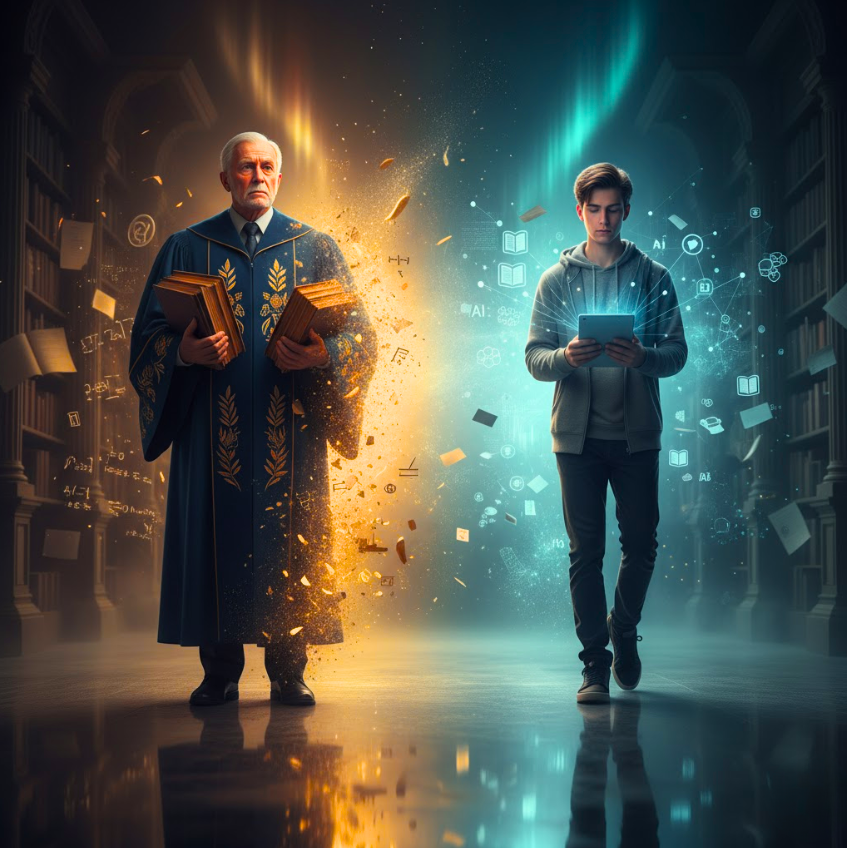 And yet, instead of celebrating this shift, many cling to the illusion of mastery. They talk about "authentic creativity" as if human bias and ego were ever pure. They dismiss generative work as derivative, forgetting that most human thought is derivative too.
The loudest critics of AI often sound like musicians watching the piano being invented. They're not protecting art. They're protecting exclusivity.
But history is unkind to gatekeepers. Every time knowledge becomes easier to access, the world becomes less dependent on those who hoarded it. That pattern has never reversed, and it will not start now.
The gatekeepers know this. They just cannot admit it publicly. So instead, they perform concern.
The Performance of Fear
You've seen the script.
Step one: declare AI a threat to humanity.
Step two: try to overregulate it.
Step three: declare it as a overhyped.
The irony is almost poetic.
Those who are trying to control the narrative claim to be worried about AI eroding creativity, consuming resources, bad the to the environment... you name it. What they really fear is losing their monopoly on power. When anyone can think as fast, write as good, and create at scale, the walls that kept them relevant start to collapse.
You can feel the narrative wobbling. The new talking point is no longer existential risk. It's economic risk. The shift from "AI might kill us" to "AI is a hype cycle" is psychological. A survival tactic.
This is what people in power do when they cannot stop a revolution. They trivialize it.
The Ivory Tower Cracks
Universities once stood as the sanctuaries of intellect. Now they're scrambling to ban or "contain" AI. Why? Because a chatbot can now teach, explain, and guide more patiently than many lecturers.
For centuries, education was sold as scarcity. Now AI is offering abundance. The academic model depends on gatekeeping: admissions, exams, tuition, hierarchy. The AI model depends on access. The two cannot coexist without tension.
The same is happening in journalism, law, consulting, and even healthcare. Professionals who once built their entire career on mastering information are discovering that mastery is no longer enough.
This is the part that many don't want to hear. The problem is not that AI will replace experts. The problem is that AI will expose which "experts" were simply memorizing patterns and selling authority.
AI doesn't threaten excellence. It threatens pretense.
The Real Divide Is Not Digital. It's Psychological.
We talk a lot about the digital divide, but the real divide is between those who adapt and those who cling.
The people who embrace AI are not all technologists. They're pragmatists. Teachers using AI to design better lessons. Doctors using AI to help more patients. Entrepreneurs using it to build prototypes.
Meanwhile, entire institutions are pretending that containing technology is somehow ethical. They warn about bias, but ignore the fact that human systems have been biased for centuries. They warn about misinformation, but forget that traditional media has manipulated narratives for decades. They warn about job losses, but stay silent about wage stagnation, credential inflation, and exploitation, all human traits.
And perhaps that's what stings the most.
The machine is not the problem. The mirror it holds up is.
 The Moral Hypocrisy of "Ethical Concern"
AI comes with real risks: bias, surveillance, misinformation, environmental costs. These matter. But so does context.
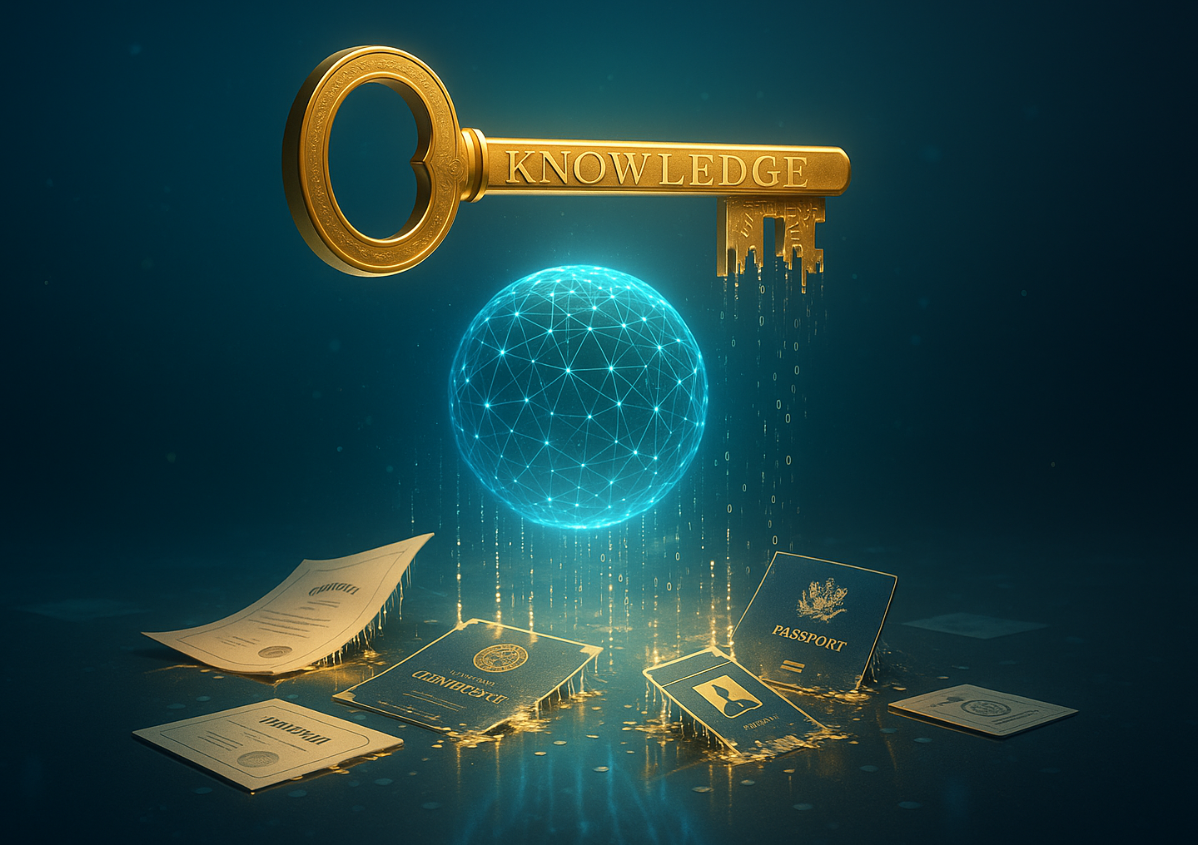
When the same corporations that profit from closed data ecosystems start lecturing about "AI ethics," forgive me for being cynical. Ethics without equity is just public relations.
If you truly believe in responsible AI, then open access is not optional.
Not adopting AI does not preserve fairness. It preserves privilege.
Regulation is necessary, but when it becomes an instrument for keeping smaller players out, it turns from safeguard to suppression. History is repeating itself. The printing press was once called dangerous. Electricity was once seen as uncontrollable. The internet was once dismissed as a fad.
Every revolution starts with moral panic, followed by monopolization, and ends with normalization. The same script is unfolding, only faster.
The Irony of the Musk Exception
Of all the tech titans, Elon Musk is perhaps the strangest outlier. While most corporate elites oscillate between panic and denial, Musk leans into the chaos.
He doesn't hide from the idea that AI could disrupt everything. He thrives on it. Say what you will about his style, but his openness about existential risk feels less like performance and more like self-defeating prophecy.
The rest, however, act like prophets of doom while secretly racing to catch up. They invest in AI startups even as they caution the public about overreliance. They build private models while warning governments about the dangers of open ones. I have a connection on linkedin, a "professor", whose main purpose is to trash everything OpenAI does, yet all his images are all branded as generated by ChatGPT... and he is building his own AI.
These people fear AI because it exposes the myth of their uniqueness. If everyone can access the same cognitive power, their resumes become relics. Their authority dissolves.
They're not afraid AI will destroy humanity. They're afraid it will democratize it.
Rooting for the Great Equalizer
AI is not waiting for permission. It has already democratized access to knowledge. The only ones still debating that fact are those who built their empires on scarcity.
They tell us AI will not replace humans. Perhaps not. But it will certainly replace their advantage.
For centuries, knowledge was currency. Now it's a utility. And just like electricity, once it's available to everyone, it stops being a privilege and becomes an expectation.
That shift is irreversible.
The real story is not about machines taking over. It's about humans losing their monopoly on meaning. AI didn't make us less valuable. It made us accountable. It revealed who was adding real insight and who was merely repeating old formulas for a fee.
That's why it feels threatening. Not because it dehumanizes us, but because it democratizes us.
The Ramyfications
The next time someone says "AI is just a tool," remind them that so was the printing press. Every tool that multiplies human capability also multiplies equality.
AI is the great equalizer, not because it replaces people, but because it removes excuses.
You can join it, shape it, and use it to amplify your humanity. Or you can mock it until it replaces the illusion that you ever had a monopoly on intelligence.
The choice, as always, belongs to those brave enough to embrace change.
I'm an internal medicine doctor fascinated by how technology exposes not just systems but people. Exploring digital health, mental health, and responsible AI... one uncomfortable truth at a time.
This article draws on ISO and IEEE frameworks for AI governance, UNESCO's ethics guidelines, and current AI model developments from generative AI tools, which don't care about elitist approval.