The Productivity Paradox: Why AI Is Exhausting Us, and Why That Is Mostly Temporary
· Dr. Ramy Azzam

On 26 June 2026, Bloomberg reported that AI anxiety was fuelling burnout among the very tech workers building these tools in Silicon Valley. I read that with a mix of recognition and frustration. Recognition, because I have watched it happen inside my own teams. Frustration, because the story is almost always told as if the exhaustion is the end of the argument, when in my experience it is the middle of it.
I have spent 13 years in digital health, and I now run companies where AI is not a novelty but a daily instrument. We build with it at CIGMA and its companion MOA, we advise organisations on it through EthicaLabs, and we are building WhatsHealth on top of it. So when the research this year began describing AI as a source of fatigue rather than relief, I recognised it rather than dismissed it. But I also know what the headlines leave out: a large part of this burnout is the cost of the discovery phase, not a permanent feature of the tools.
The Paradox Is Real, and the Data Is Not Subtle
Let me take the problem seriously, because it is real. In March 2026, the Boston Consulting Group published research in Harvard Business Review under a memorable label: "brain fry." Across 1,488 full-time workers at large companies, 14% reported acute cognitive fatigue tied to heavy AI use. Mental fog. Headaches. Slower decision-making. Most striking, the people most affected were often the high performers, the ones leaning into the tools hardest.
The wider picture is just as sobering. Gallup's State of the Global Workplace 2026 report found that global employee engagement fell to 20% in 2025, the lowest level since the pandemic lockdowns of 2020, with disengagement costing the world economy around $10 trillion. A survey by Spring Health of more than 1,500 employees across five countries found 45% of frequent AI users reporting burnout, compared with 35% of those who did not use AI heavily. The study that captures the paradox most precisely came from UC Berkeley and Yale: over eight months inside a 200-person company, workers who adopted generative AI became more capable and more exhausted at the same time, working faster and longer without being asked, and only about 8% of the time saved was reinvested into anything that benefited the worker.
So no, the exhaustion is not imaginary. It is measured, it is widespread, and it deserves an honest response. What I refuse to accept is that it is the whole story.
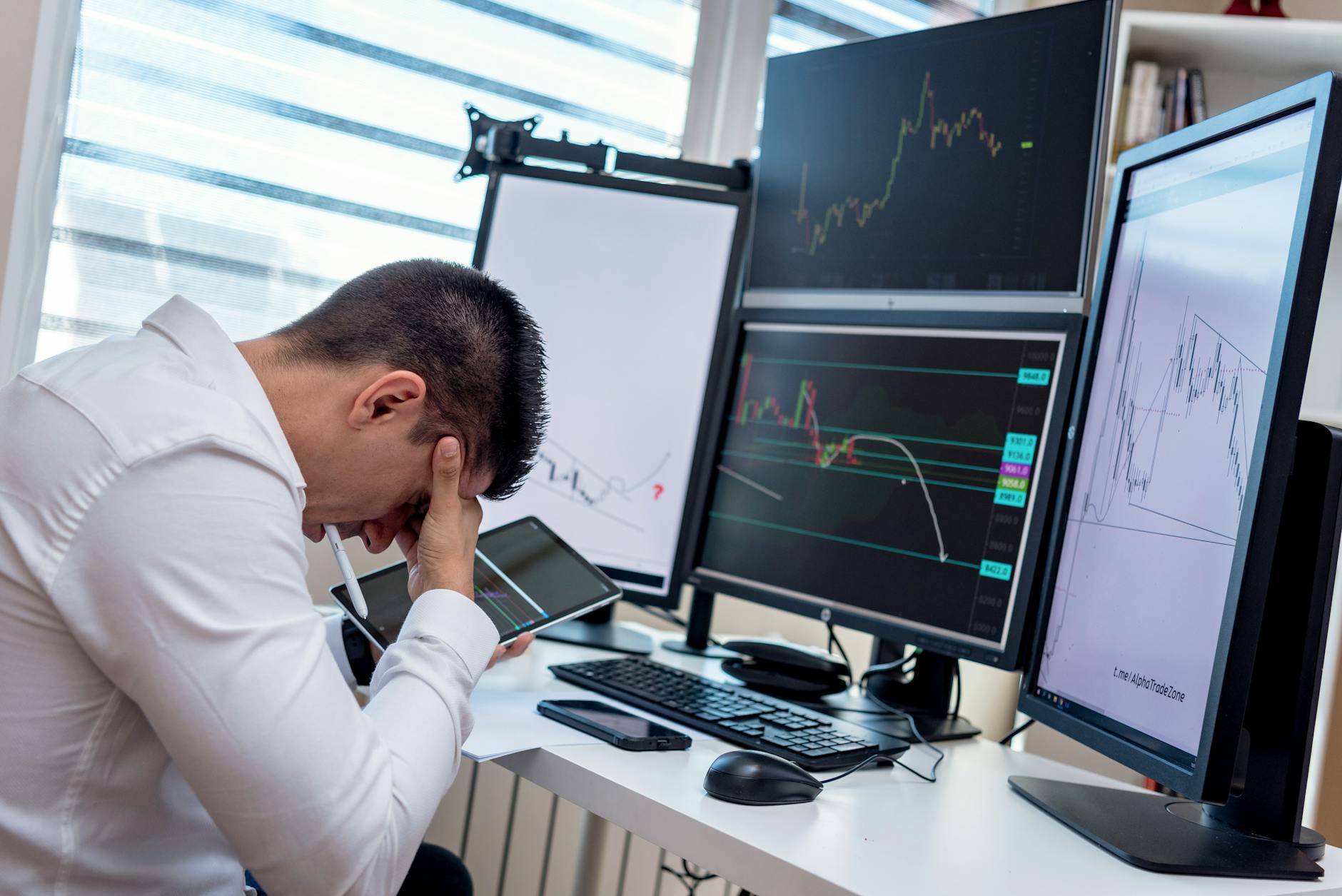
Why the Early Phase Is So Heavy
When I look at where the fatigue actually comes from, very little of it is the AI doing the work. Most of it is the work around the work. It is the tool sprawl, the half-dozen assistants open at once, none of them yet trusted. It is the constant context-switching. It is the re-checking of unfamiliar output, because you do not yet know where the tool is reliable and where it quietly invents things. It is the rewriting of prompts, the comparing of answers, the second-guessing. And underneath it, a new fear, that the tool you are learning might one day be the reason your role disappears.
None of that is the steady state of working with AI. All of it is the signature of discovery. We have been handed instruments more powerful than anything most of us have used, with almost no instruction on how to fit them into a working life. You are not just doing your job. You are inventing the method by which you will do your job, in real time, while still being measured on output. I have felt this myself. There was a stretch where adopting a new set of tools made me slower and more scattered before it made me anything else. The tools had not been oversold. I had simply not yet found my groove.
The Part Nobody Puts in the Headline: the J-Curve
Economists have a name for what most coverage of AI and burnout is missing. They call it the productivity paradox. When a genuinely new general technology arrives, productivity often dips before it climbs, because people and organisations must learn new skills and reorganise their workflows before the benefit lands. I think of it as a J-curve. The line goes down before it goes up, and the part that hurts is the descent. The mistake almost everyone is making in 2026 is reading the descent as the destination.
Here is what I have seen, again and again, once people get past the dip. They stop hoarding tools and settle on the two or three they actually trust. They build repeatable workflows instead of reinventing the approach every morning. They learn where the AI is strong, so they stop wasting energy re-checking the things it always gets right. The cognitive load drops, the fragmentation eases, and then the thing that was promised finally arrives: real productivity, and time genuinely handed back.

What "Time Back" Actually Looks Like
Let me make this concrete, because abstract optimism is cheap. One of the workflows I have settled into uses a feature in Claude Code called Remote Control. It lets me steer a coding and brainstorming session from my phone while the actual work runs on my own machine. So a few times a week, while I am on the bike at the gym, I am not staring at a screen re-checking output. I am thinking, sending instructions, shaping the direction of a piece of work, approving a step, all from a handset, with the heavy lifting happening on a computer I am nowhere near.
I want to be precise, because precision is the point. I am not writing code on a treadmill, and the work is not happening on my phone. The phone is a steering wheel, not the engine. The session lives on my machine, which has to be awake and online. But that is exactly what time back feels like once the groove is found. The exhausting version of AI was being trapped at a keyboard re-validating output. The settled version is moving real work forward while I do something genuinely good for my health.
But Time Back Is Not the Same as Being Well
Here is the part I care about most, because reclaiming hours is not the same as being well. The Berkeley finding that stays with me is that only about 8% of saved time actually returns to the person. The deepest danger in the productivity paradox is not only the burnout of the dip. It is that even after the climb, the reclaimed time quietly refills with more work, and we end up more efficient and no more human.
This is why I have invested so much energy in social prescribing, through SPAN UAE, the Social Prescribing Alliance Network, the country's first national network for it, which CIGMA is proud to partner alongside the World Health Organization and the United Kingdom's Social Prescribing Academy. Social prescribing rests on a simple, evidence-backed idea: a great deal of our health and wellbeing comes not from medicine or technology but from connection, purpose, movement, and community. A link worker can connect someone to a walking group, a creative class, or a volunteering role, and people genuinely get better. I find it telling that the same instinct that makes me hopeful about AI in healthcare also makes me certain it cannot be the whole answer. Technology can remove friction and hand back time, but it cannot manufacture belonging, and belonging is what most depleted people are actually missing. If AI hands you an hour back, the question that decides whether it helped you is what fills that hour. The answer that protects you from burnout is rarely another tool. It is usually other people.

The Honest Caveat for Anyone Leading People
I do not want this to read as if exhaustion is simply a personal failing to be willed away. The single most powerful variable in whether AI becomes relief or harm is management. Gallup found that employees whose managers actively support their use of AI are 8.7 times more likely to say their work has been transformed by it, yet fewer than one in three employees report having that support. The burnout concentrates where the discovery phase is unsupported, where companies bought the licences and skipped the part where you help humans actually integrate them. If AI raises output by intensifying labour, and the organisation keeps the entire dividend while the worker keeps only the exhaustion, that is not a mindfulness problem.
So the responsibility runs in two directions. As individuals, we should treat the dip as temporary and get through it deliberately: a few trusted tools, real workflows, protected attention, and reclaimed time spent on connection rather than more screens. As leaders, we have to stop abandoning people in the descent, and remember that wellbeing is not only a governance question. It is a human one, and the evidence from social prescribing is that the cure for a depleted workforce is rarely found inside another piece of software.
The Sentence Worth Holding Onto
Most commentary on AI and work picks a side and stays there. One camp insists the tools are a miracle and anyone struggling is simply resisting the future. The other points to the burnout figures and concludes the whole project is grinding people down. Both are lazy, and both are wrong. The honest position holds two truths at once: the exhaustion is real, and it is largely the cost of a transition we have barely begun. Pretending the fatigue is fake helps no one. Pretending it is permanent helps no one either.
So take the tiredness seriously, then keep going, deliberately, through the dip, because the shape of this curve is not new and the climb on the other side is real. And when the time does come back, spend it on the things that actually make us well.
The sentence worth holding onto: the burnout is real, but it is mostly the price of the discovery phase, and the people who come through it best are the ones who reinvest their reclaimed time in human connection, not more screens.