The UAE approved the UAE Integrative Medicine Strategy - Here is why this matters
· Dr. Ramy Azzam
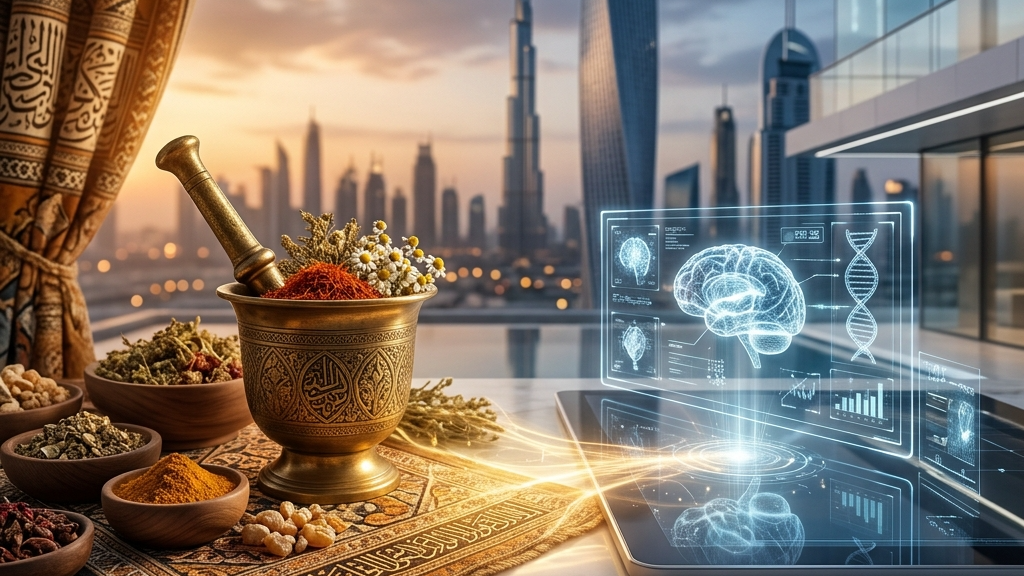
In September 2025, the UAE Cabinet established the UAE Integrative Medicine Council, a national body with a single, ambitious mandate: to govern the systematic integration of traditional, complementary, and integrative medicine into the country's modern healthcare infrastructure. Not as a pilot program. As a national strategic priority, backed by a seven-pillar roadmap approved in January 2026.
I did not read it as a regulatory announcement. I read it as the signal that the future of healthcare governance is no longer about choosing between modern medicine and traditional healing. It is about building the frameworks that allow both to coexist, governed by evidence, protected by regulation, and enhanced by technology.
Here is why this matters far beyond the borders of the UAE, and what it reveals about where global healthcare is heading.

Why Integrative Medicine Is Having Its Global Moment
The numbers are difficult to argue with. The World Health Organization estimates that eighty percent of the global population uses some form of traditional or complementary medicine. Not in opposition to conventional care, but alongside it. Acupuncture for chronic pain management. Ayurvedic nutrition alongside metabolic treatment. Mindfulness-based stress reduction prescribed by psychiatrists. The integration is already happening in clinical practice worldwide. What has been missing is the governance.
In May 2025, the World Health Assembly adopted the WHO Global Traditional Medicine Strategy 2025 to 2034, a decade-long framework calling on member states to strengthen the evidence base for traditional medicine, ensure its safety through regulatory mechanisms, and integrate it into national health systems. The strategy explicitly calls for scientifically valid, evidence-based integration, rejecting both the uncritical embrace of unproven practices and the dismissive rejection of healing traditions that have served populations for millennia.
The global wellness economy, now valued at over five trillion dollars, reflects consumer demand that has already outpaced regulatory infrastructure. People are not waiting for governments to validate their interest in holistic health. They are spending on it, seeking it, and integrating it into their lives. The question is no longer whether integrative medicine belongs in mainstream healthcare. The question is who will govern it responsibly, and who will let it proliferate without guardrails.
The UAE's Seven-Pillar Strategy: A Governance Blueprint
The UAEIMC's strategic roadmap is remarkable not for any single element, but for its comprehensiveness. Seven pillars, each addressing a dimension that most countries have not even begun to consider systematically.
Robust governance comes first, establishing regulatory frameworks for licensing, oversight, and professional standards across all traditional and complementary disciplines. The UAE already licenses practitioners across Ayurveda, acupuncture, hijama, Unani medicine, chiropractic, homeopathy, naturopathy, and traditional Chinese, Japanese, and Korean medicine. The new strategy creates unified governance across these disciplines rather than managing them in isolation.
Integrated service delivery means embedding traditional and complementary therapies directly into conventional treatment pathways. This is not about building separate clinics. It is about ensuring that when a patient presents with chronic pain, the treatment plan can include both pharmacological intervention and evidence-based complementary approaches, managed within the same care coordination system.
Comprehensive insurance coverage addresses the access question that undermines integrative medicine in most countries. When complementary therapies are excluded from insurance, they become luxuries available only to those who can pay out of pocket. The UAE's strategy mandates insurance inclusion, treating integrative services as part of standard healthcare coverage.

The remaining pillars cover education and workforce development, ensuring practitioners are trained to operate across traditional and modern paradigms; research and innovation, advancing the evidence base through scientific inquiry; international collaboration, positioning the UAE as a global hub for integrative medicine knowledge exchange; and community engagement, building public understanding of what responsible integrative healthcare actually looks like.
What distinguishes this from policy documents gathering dust in other health ministries is execution infrastructure. The UAEIMC has direct Cabinet backing, cross-emirate authority, and integration with existing regulatory bodies including the Dubai Health Authority, the Department of Health in Abu Dhabi, and the Dubai Healthcare City Authority. This is governance designed to operate, not merely to exist on paper.
Where Artificial Intelligence Meets Ancient Wisdom
Perhaps the most fascinating dimension of the UAE's integrative medicine strategy is its intersection with the country's parallel investments in artificial intelligence and digital health infrastructure.
Dubai Medical University has developed an initiative called Dr. Layla, an AI-enabled platform that digitizes traditional and medicinal plant knowledge, including Emirati traditional medicine practices that have historically been transmitted orally across generations. Dr. Layla functions as a virtual faculty member, structuring knowledge from multiple healing traditions into an interactive, scientifically verified educational system. It does not replace clinical judgment. It preserves and systematizes knowledge that might otherwise be lost as traditional practice evolves.
This sits within a broader digital health ecosystem that includes NABIDH in Dubai and ADHICS in Abu Dhabi, integrated electronic health record systems managing billions of clinical data points. A new AI-powered National Unified Digital Platform for healthcare professional licensing is scheduled for launch in Q2 2026, creating seamless workforce mobility across emirates.
The governance challenge this creates is genuinely novel. How do you regulate AI systems that advise on traditional medicine? What evidence standards apply when machine learning models analyze outcomes from complementary therapies? How do you ensure that the digitization of ancestral healing knowledge respects cultural heritage while meeting modern safety requirements?

These are not theoretical questions. They are active design challenges for anyone building healthcare AI in the region, and the UAE is confronting them with the same governance-first approach that characterized its response to the broader AI regulation wave of 2026.
The Mental Health Connection Most People Miss
Integrative medicine's most significant and least discussed intersection is with mental health. The practices that form the core of complementary medicine, mindfulness meditation, breathwork, yoga, structured relaxation techniques, movement therapies, are precisely the evidence-based interventions that mental health professionals increasingly prescribe for anxiety, depression, stress management, and psychological resilience.
The WHO's own data on the MENA region tells a story of profound unmet need. One in eight young people in the region experience a mental health condition. Seventy-one percent of those who need help never receive it. The barriers are well documented: cost, access, cultural stigma, and a chronic shortage of mental health professionals relative to population need.
Integrative approaches offer a compelling pathway to close some of these gaps. Not by replacing clinical mental healthcare, but by normalizing wellness practices within a cultural framework that many communities already accept. When mindfulness-based stress reduction is offered as part of an integrative health program rather than as mental health treatment, the stigma barrier drops significantly. When breathing exercises and guided relaxation are framed as holistic wellness rather than psychological intervention, people engage who would never have walked into a therapist's office.
The governance of digital mental health tools, which I have written about extensively in the context of the WHO's January 2026 declaration on generative AI and mental health, becomes even more critical when these tools incorporate integrative approaches. Evidence-based wellness exercises, AI-guided meditation, structured journaling, and mood monitoring all sit at the intersection of technology, traditional wellness practice, and mental health support. Governing them requires frameworks that understand all three domains.
What the World Can Learn From This Model
The UAE's integrative medicine strategy is instructive because it demonstrates what governance-first integration looks like in practice. Most nations have traditional medicine practices that their populations use extensively. Few have built the regulatory infrastructure to ensure those practices are safe, evidence-based, and accessible through standard healthcare channels.
The WHO's 2025 to 2034 strategy provides the global framework. The UAE is providing one of the first comprehensive implementation models. The lessons are clear: integration without governance is dangerous, governance without integration is irrelevant, and neither is complete without the digital infrastructure and evidence standards that modern healthcare demands.
For healthcare organizations, insurers, and technology companies operating in the region, the implications are immediate. The regulatory landscape for integrative medicine is crystallizing rapidly, and organizations that understand these frameworks early will have a significant advantage over those treating them as a future concern.
Where I Stand
At EthicaLabs, we work with organizations navigating the governance complexity that integrative medicine creates. From multi-standard compliance frameworks integrating ISO 42001, IEEE 2089, and WHO guidance, to practical advisory on how AI systems operating in integrative health contexts should be designed and governed, we help our clients build the governance architectures that responsible innovation demands. The convergence of traditional medicine governance, AI regulation, and healthcare compliance creates a uniquely complex landscape, and the organizations that navigate it well will define the next decade of healthcare delivery in the region.
At CIGMA, we are building what responsible, integrative digital mental wellness looks like in practice. Our AI companion MOA provides evidence-based resilience exercises, guided mindfulness, mood monitoring, and cognitive behavioral techniques, the same complementary approaches that the UAE's integrative medicine strategy validates as part of holistic health. MOA is transparent about being AI, includes structured crisis escalation to human support, and is designed specifically for the cultural context of the communities we serve.
The future of healthcare is not modern medicine versus traditional healing. It is modern medicine and traditional healing, governed by evidence, enhanced by technology, and made accessible to everyone. The UAE is showing the world what that future looks like when a government takes it seriously. The rest of us need to pay attention.