What is Social Prescribing and Why is the Middle East Perfectly Positioned for it?
· Dr. Ramy Azzam

I first heard about social prescribing in 2018 when news broke about Scotland's Shetland Islands pioneering a program that allowed doctors to prescribe nature-based activities. It was a bold step, integrating the simple act of walking through woodlands or engaging with local wildlife into formal healthcare practice. The idea intrigued me, not because it was entirely new (Japan had already popularized "Shinrin-yoku" or forest bathing), but because of its formal recognition within a Western healthcare system. It challenged the conventional narrative that medicine must come in pill bottles or sterile clinics.
Fast forward to today, I attended a webinar hosted by the World Health Organization, exploring the global impact and future of social prescribing. The discussions were enlightening, but one thought kept echoing in my mind: the Middle East, especially the UAE, is uniquely poised to lead in this space. The region's natural assets, sunshine year-round, fascinating desert landscapes, majestic mountains, and an evolving urban ecosystem designed for outdoor engagement, make it an ideal setting for nature-based therapeutic interventions.
The Evolution of Social Prescribing
Social prescribing represents a paradigm shift in healthcare. It empowers clinicians to address social, emotional, and practical needs by connecting patients to community-based resources. This can range from recommending participation in local art classes, joining walking groups, or volunteering, to more nature-centric activities like community gardening or hiking. By addressing social determinants of health, like loneliness, stress, and inactivity, social prescribing aims to improve overall well-being in a holistic manner.
Scotland's program was the first in the UK to formalize this approach, prescribing not just medication but experiences, birdwatching, beach walks, and hiking among them. This idea resonates deeply, especially now that mental health challenges are on the rise worldwide. During the WHO webinar, it was evident that social prescribing isn’t merely an adjunct to conventional care; it’s a necessary evolution.
Mental Health and Longevity: The Power of Connection
Social prescribing isn't just about getting outside or being active. It's about reconnecting with one's community and environment, two powerful contributors to mental health and longevity. Numerous studies, including the landmark Alameda County Study, have consistently shown that strong social and community ties are linked to longer and healthier lives. In contrast, social isolation and loneliness have been equated with smoking 15 cigarettes a day in terms of their impact on health.
The WHO emphasizes that health isn’t merely the absence of disease but a state of complete physical, mental, and social well-being. Social prescribing addresses this by promoting meaningful connections, whether through nature, community, or creative expression. It's a proactive approach, reducing the burden on primary care and emergency services by addressing root causes rather than merely treating symptoms.
Why the UAE and the Middle East Are Perfectly Positioned
Reflecting on the potential for social prescribing in the Middle East, particularly in the UAE, it becomes clear that the region is uniquely positioned to embrace and excel in this approach. The natural environment is a significant advantage. The UAE’s diverse landscapes, from the stunning Hajar Mountains in Ras Al Khaimah to serene desert dunes and expansive coastlines, provide an ideal backdrop for nature-based therapies.
I recently experienced this firsthand during a hike in Ras Al Khaimah with the Dubai Science Park Leadership Network. As we navigated the trails with panoramic views stretching across the rugged mountain range of Wadi Shawka, it was evident how powerful nature can be as a restorative force. The clear air, the vastness of the landscape, and the physical exertion combined to create a therapeutic experience that no conventional clinic could replicate.
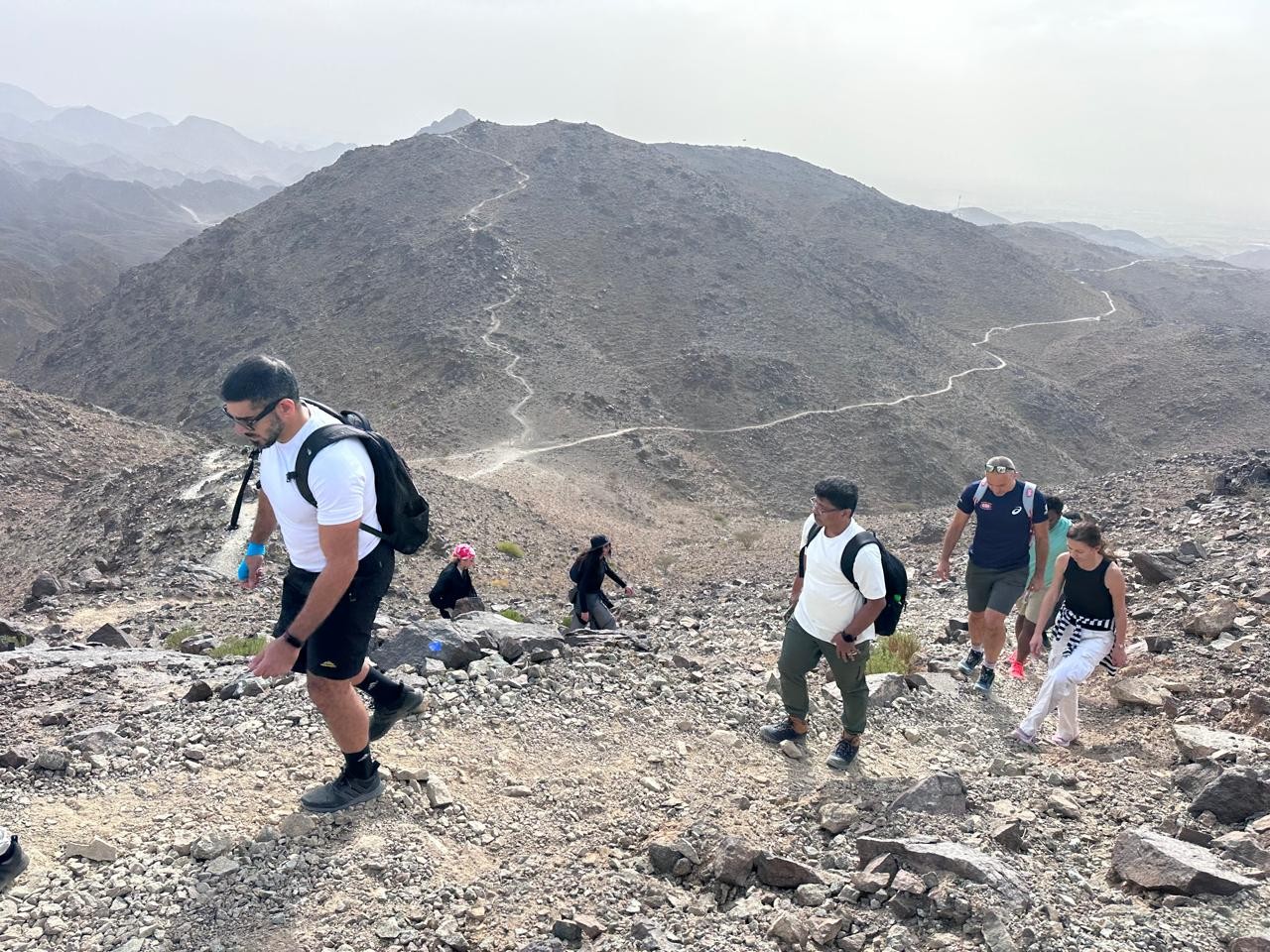 DSP Leadership Network's Hike
The region's year-round sunshine encourages outdoor activities, be it hiking, cycling, or simply jogging along the beach. In a culture already rooted in social gatherings and community, integrating social prescribing feels not just feasible but natural. The UAE's leadership in health innovation and digital transformation further supports this, paving the way for tech-enabled social prescriptions, like virtual community groups or guided nature walks through augmented reality.
Building a Supportive Ecosystem for Social Prescribing
For social prescribing to thrive, it requires more than just beautiful landscapes and good weather. It necessitates a cohesive infrastructure, involving healthcare providers, community organizations, and governmental support. Link workers, also known as community connectors, are central to this model. They engage with individuals, understand their needs, and connect them to the right community resources. In the UAE, this role could be integrated into existing health systems, leveraging digital health platforms to enhance accessibility.
Another critical component is community accessibility. In the Middle East, ensuring that social prescribing is accessible to all segments of society, regardless of socioeconomic status, age, or gender, is crucial. This involves strategically placing community hubs in easily reachable locations, such as mosques, cultural centers, and public parks, where people naturally gather. Additionally, leveraging digital platforms, which are widely used across the region, can enhance accessibility, allowing individuals to learn about and participate in prescribed activities virtually.
Addressing Challenges and Charting the Future
Despite its promise, social prescribing isn't without challenges. Critics argue that its impact is difficult to measure, and evidence of its long-term effectiveness is still evolving. However, this shouldn't deter us from exploring its potential. Robust research and data collection can provide the evidence base needed to refine and expand social prescribing practices.
The UAE is, in many ways, already practicing social prescribing. The government has been proactive in promoting community activities that naturally align with the principles of social prescribing, fostering a culture of well-being through physical activity, cultural engagement, music, food, and poetry.
For instance, the Dubai Fitness Challenge, which encourages residents to engage in 30 minutes of daily physical activity for 30 days, is a prime example of social prescribing in action. This initiative not only promotes physical health but also strengthens community bonds through group workouts, public events, and family-friendly activities. Similarly, events like the Abu Dhabi Culture Summit and the Dubai Opera’s diverse programming celebrate cultural expression and community engagement. These events offer more than just entertainment, they create social connections, reduce isolation, and contribute to emotional well-being.

A Vision for Social Prescribing in the Middle East
As I reflect on the evolution of social prescribing, its potential feels almost intuitive. The Middle East, with its natural beauty, rich cultural heritage, and unwavering commitment to health innovation, is uniquely positioned to champion this movement on a global scale.
However, for social prescribing to truly transform healthcare, it must be seamlessly integrated into clinical practices, hospitals, and health systems at large. It requires more than community enthusiasm, it demands formal mechanisms, strategic implementation, and systemic change. Healthcare professionals need to be equipped and empowered to prescribe social interventions just as readily as they do medications. This means integrating social prescribing pathways into electronic health records, ensuring link workers are embedded within healthcare teams, and fostering cross-disciplinary collaboration.
Most critically, for social prescribing to thrive, it needs to be recognized and valued within the healthcare economy. Mechanisms for reimbursement must be established to incentivize its use and ensure its sustainability. Health insurers, public health agencies, and policymakers must prioritize social prescribing, recognizing its potential not only to enhance individual well-being but to reduce healthcare costs by addressing the root causes of ill health. In some cases, it should even be prioritized over conventional prescribing, shifting the focus from symptomatic relief to holistic healing.
Social prescribing is about more than preventing illness, it’s about promoting a healthier, happier, and more connected way of life. In the grand narrative of healthcare, social prescribing represents a transformative chapter. The Middle East, with its unique blend of tradition, community, and innovation, is poised to lead this story to a compelling and impactful conclusion, not just by embracing social prescribing culturally, but by embedding it within the very framework of modern healthcare.