When Medicine Forgot How to Build
· Dr. Ramy Azzam
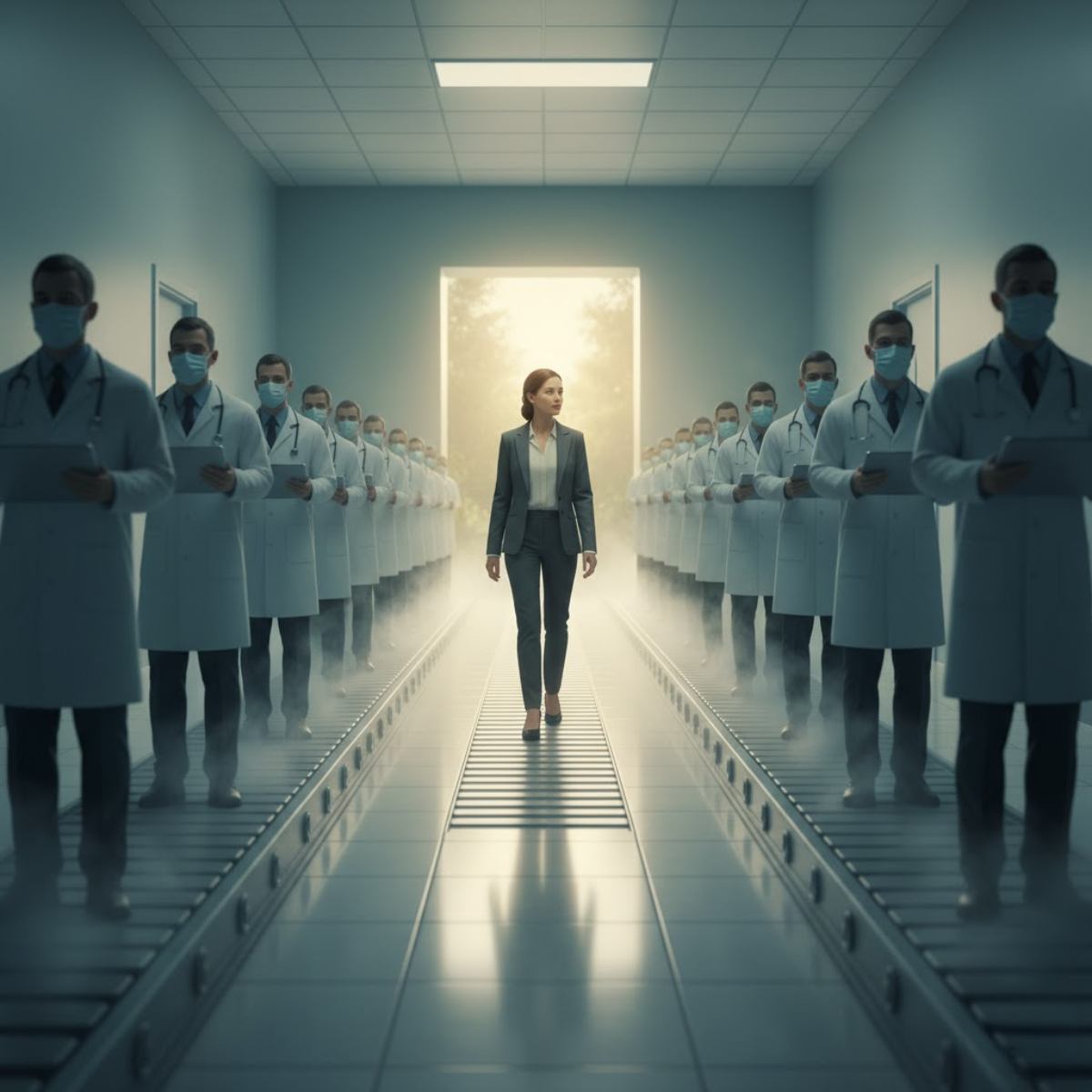
I'm frustrated.
Not with patients. Not with the endless documentation. Not even with the bureaucracy that seems designed by people who've never actually worked in healthcare.
I'm frustrated with how medical education has evolved into something that struggles to balance two competing demands: retaining a ton of information while fostering creativity.
And increasingly, the former is winning at the expense of the latter.
Medical schools produce exceptional clinicians. Brilliant diagnosticians. Skilled proceduralists. People who can recall obscure drug interactions at 3 in the morning. But the system is increasingly optimized to create knowledge appliers rather than knowledge creators. And while every profession has its innovators, the ratio in medicine concerns me.
The system is increasingly optimized to create knowledge appliers rather than knowledge creators.
The challenge isn't that medical education is fundamentally broken. It's that the sheer volume of knowledge physicians must master has grown so immense that it leaves little cognitive space for anything else. This isn't a failure of intention. It's what happens when exponential information growth collides with the unfortunate reality that, unlike data centres, you can't dump billions of dollars to scale the human brain compute, yet?!
The Cognitive Overload Crisis
Medical knowledge has been expanding exponentially, doubling every 50 years in 1950, to 7 years in 1980, to 3.5 years in 2010. A 2011 study projected that by 2020, medical knowledge would be doubling every 73 days.
The trajectory is undeniable: we're drowning in information at a rate that fundamentally changes what it means to deliver healthcare. At this rate, what you learned in school is outdated before you finish paying off your student loans. One study found that if a primary care provider tried to practice according to all current guidelines, they would need to work nearly 27 hours per day. Another estimated that staying current with just the high-quality primary care journals would require over 600 hours per month of reading. Let me put that in perspective: there are roughly 730 hours in a month. So if you wanted to stay truly current, you'd need to spend about 80% of your waking and sleeping hours reading medical journals. This is what my dad used to tell me when I was in med school: "We used to study between 18 to 20 hours a day" ?? I thought he was exaggerating.

Yes, medical education must prepare physicians to practice safely, which requires mastering enormous amounts of information. But in doing so, it inadvertently conditions doctors to think primarily in terms of recall rather than reimagination. When you spend your entire mental bandwidth trying to remember which drug interactions matter for which patient populations, you have little energy left to ask whether the entire approach to managing that condition might need rethinking. From day one of medical training, you learn to think in protocols. In guidelines. In evidence-based pathways.
This is essential in many contexts, and I'm not arguing against it wholesale. In emergency settings, there's no time for creative exploration. No one wants their trauma surgeon having an existential moment about alternative approaches to hemorrhage control while you're bleeding out on the table. But this mindset, absolutely necessary in acute care, often becomes the default mode for everything else. Over time, many physicians become extraordinarily skilled at operating within existing frameworks but less practiced at questioning whether those frameworks remain optimal.
To stay truly current, you'd need to spend about 80% of your waking and sleeping hours reading medical journals.
To this day, medical education struggles to cultivate equally is the capacity to generate fundamentally new approaches to persistent problems. And yes, this where research comes in, but anyone who has worked in research, again, knows the mind boggling frameworks you need to operate within and the hoops you need to jump through to get validated, let alone published.
My First "Hello, World"
For years I worked with developers, architects, and product managers on digital tools to improve clinical workflows or enhance decision-making. We'd join the daily scrum, I'd draw on the whiteboard the flow, everyone nods in agreement, but then the result? Not quite what I asked for.
Something always got lost in translation.
I spoke clinical logic. Developers spoke coding logic. We were both fluent, just in mutually incomprehensible languages. So, I decided to roll up sleeves and spent my evenings reading all kinds of paperback "For Dummies" books, so at least I can try to speak the same language.
And in 2014, I installed my first IDE and wrote my first line of python code. Nothing impressive by computer science standards. No one was calling me the next Bill Gates. But it opened a door I hadn't known existed. Fast forward a couple of years, I was implementing classification models and Naive Bayes classifiers over Azure for risk stratification and sentiment analysis on clinical narratives.
This was before generative AI became cool, back when we called it natural language processing and natural language understanding vs the LLMs of today.
My first creative exercise wasn't academic. It was practical: optimizing patient workflow in our telemedicine platform. I didn't just theorize about it or write a strongly-worded memo to IT. I designed the frontend wireframes and prototypes. Then I went deeper, building rudimentary but functional database schemas for backend integration.
Were they elegant? Absolutely not.
But they bridged the gap between what I had in mind and what our developers needed to implement.
These exercises were not only addictive but they got me to an important discovery: the translation barrier between clinical logic and technical implementation wasn't insurmountable.
Then LLMs arrived...
Why the Bubble Critics Are Wrong
I've worked with talented developers for years. But there's always been friction between describing intent and implementing it. It's not their fault. They're translating from a language they don't speak about problems they've never experienced.
Me? I claim to have significant expertise in translation. Translating clinical insights to technological and economical insights which gave me a relative bird eye view, to observe the gaps, zoom in on them, and fix them.
This is where LLMs shine. To me, they are a marvel of communication. With LLMs, I could describe what I wanted and watch it materialize. No more multi-week cycles of explanation, misunderstanding, revision, version controls, and passive-aggressive Slack messages. That shift has transformed me from someone who waited for solutions into someone who built them. AI doesn't eliminate the need for skilled developers. It democratizes creation for domain experts who understand problems deeply but lack formal technical training.
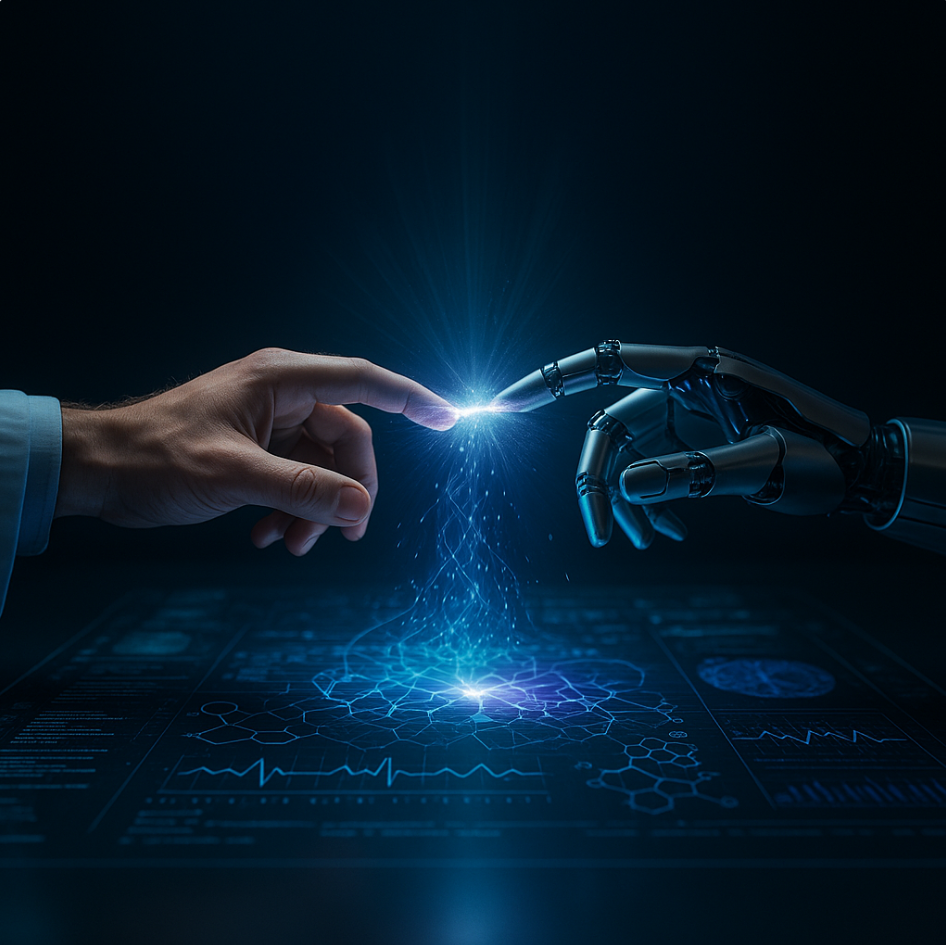
The people calling AI a bubble typically haven't experienced what it's like to have an idea at midnight, prototype it by morning, and test it with real users by afternoon. They haven't felt the creative liberation that comes from removing the bottleneck between imagination and implementation. That's not hype. That's a fundamental shift in who gets to build solutions to problems they understand intimately.
For someone trained in medicine's rigid hierarchies, where innovation often requires institutional permission, three committees, two impact assessments, and a signed waiver from the CEO's grandmother, being able to just build something yourself is indeed disruptive. It's empowering. It's the difference between describing your pain to someone who might eventually do something about it versus grabbing the tools and fixing it yourself.
What Medicine Used to Be
Medicine was born as an experimental discipline. The first surgeons were engineers who looked at the human body and thought, "I bet I could fix that with a knife and some creativity." The first epidemiologists were system designers before systems thinking had a name. The first anatomists were explorers charting unknown territory, often in ways that would make modern ethics committees faint.
Somewhere along the way, we traded exploration for standardization. We transformed evidence-based medicine into evidence-only medicine. We started fearing any deviation from guidelines, even when the patient before us doesn't fit neatly within them. Of course, this caution has benefits. It protects patients from harmful variability. But we've also suppressed the experimental mindset that once defined medical progress.
AI rekindles that spirit. It lets clinicians iterate safely, test hypotheses rapidly, and build solutions that serve actual clinical needs rather than procurement committee preferences or whatever some consultant from McKinsey decided healthcare needs.
Healthcare's real crisis is human potential constrained by cognitive overload and death by a thousand administrative tasks.
We have extraordinary minds spending enormous energy just trying to stay current. The average physician spends more time on electronic health record documentation than on direct patient care. Yes AI scribes are trying to fix that, but a siloed bolted on solution might aggravate the problem than fix it (another topic for another day).
The cure for burnout might not be resilience training or another wellness seminar about the importance of self-care while you're working 80-hour weeks. It might be giving physicians permission and tools to build again through AI native platforms.
What Medicine Should Be
AI will replace physicians.
If your professional value rests entirely on recall, you're competing with a search engine that will always be faster and more comprehensive and never needs coffee.
Human cognition is precious. Wasting it on repetitive recall when machines can handle that perfectly is economically irrational and creatively tragic. It's like using a Ferrari to deliver pizza. But if your value lies in curiosity, empathy, pattern synthesis across complex cases, and the ability to design better systems, you become more valuable than ever. AI amplifies that by removing the cognitive burden of information retrieval and allowing physicians to be creators.
Medical education must evolve beyond pure knowledge transmission. Future physicians need to learn how to think with AI, not just despite it. How to ask questions that matter. How to design systems that work. How to translate clinical insight into functional tools. Imagine if medical assessments shifted from "recall the differential diagnosis for this presentation" to "design an intervention that reduces this condition's incidence in your population by 20%." That would prepare doctors for the world they're entering, not the one that existed when rotary phones were cutting-edge technology. It would recognize that the most impactful physicians of the future won't just be excellent diagnosticians who can name seventeen rare causes of hepatosplenomegaly. They'll be physician-innovators who can identify broken systems and actually fix them.
The Physician-Creator
The physician of tomorrow will be (should be) a creator, not just a consumer of medical knowledge. They'll design digital therapeutics that deliver evidence-based interventions at scale. They'll build predictive models that identify at-risk patients before crises occur, not after. They'll understand both empathy and engineering, both the art of medicine and the science of systems. They won't just practice medicine as handed to them. They'll actively shape what medicine becomes. We need more knowledge creators, not just knowledge consumers. More people making, not just memorizing. More physicians who view a broken workflow not as an inevitable frustration to vent about in the physician lounge but as a design problem waiting to be solved
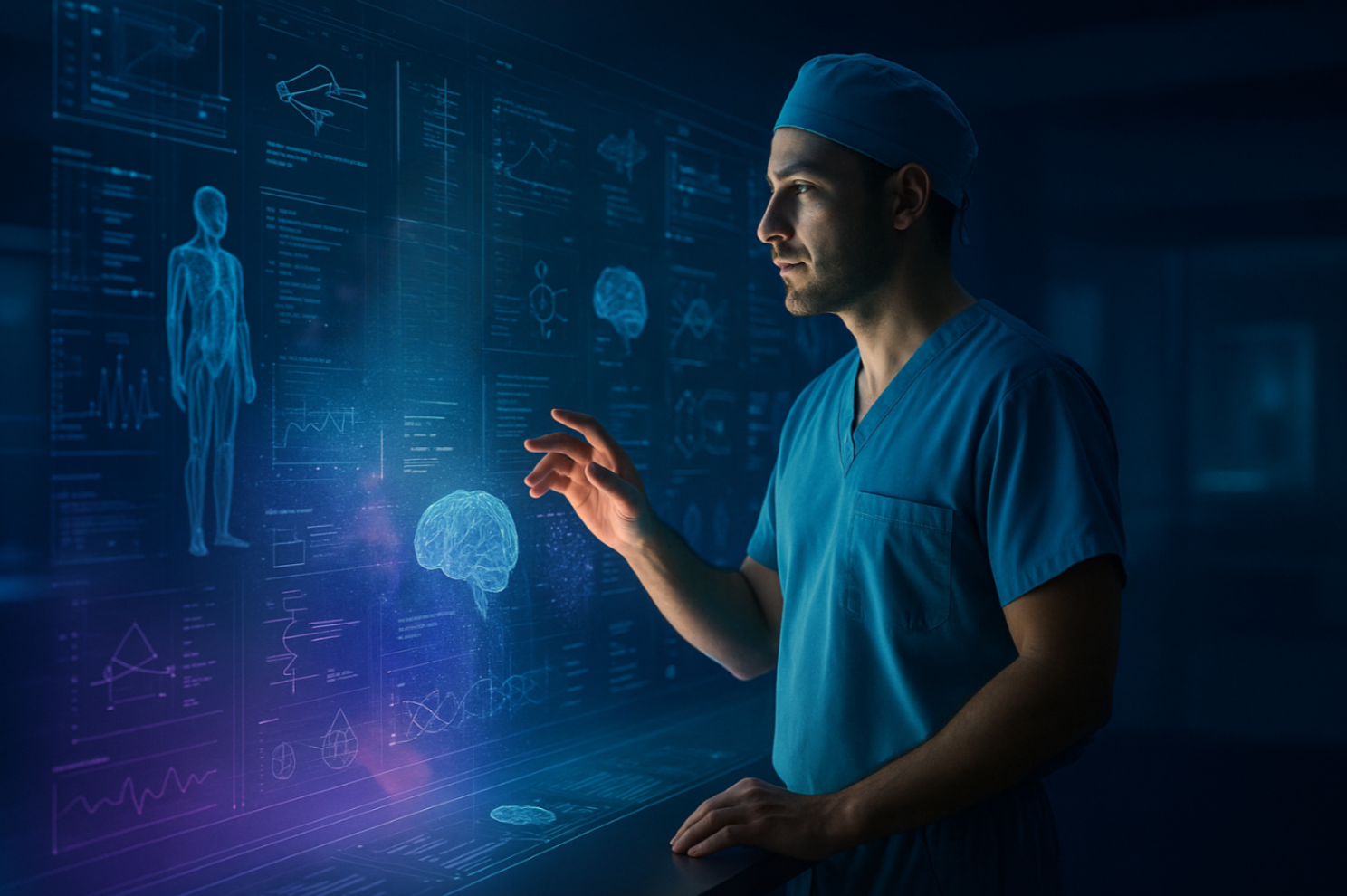
AI doesn't threaten that future. It accelerates it by making creation accessible to people who never studied computer science but who understand healthcare's problems better than anyone else. The next wave of healthcare innovation will come from clinicians who understand the problems intimately because they live them daily and now have tools to build solutions directly.
This shift is already happening, albeit slowly. Physicians are creating their own clinical decision support tools. Designing their own patient engagement platforms. Building their own analytics dashboards that actually answer the questions they need answered. This isn't about replacing IT departments or software developers. It's about enabling faster iteration, better requirements gathering, and solutions that actually fit clinical workflows because they're designed by people who live in those workflows daily and have the scars to prove it.
Here comes some shameless self-promotion
#Ramyfications
Medical education faces a volume problem, not just a pedagogy problem. The sheer amount of knowledge crowds out creative capacity, and we need AI not to replace learning but to change what humans need to learn and retain versus what they can query on demand.
AI isn't a bubble unless you define "bubble" as "thing I haven't personally tried but am confident won't matter." It's a bridge between clinical insight and technical execution that didn't exist before, democratizing innovation for domain experts who previously needed to wait for technical intermediaries who had seventeen other projects with higher priority. The next healthcare innovation wave will come from clinician-builders who understand both the problems intimately and now have tools to solve them directly.
Recall is becoming commodity knowledge. Synthesis, creative problem-solving, and system design are what matter now in an age when information is abundant but wisdom remains scarce. Creation might be the antidote to burnout, because building something meaningful reignites purpose in ways that pure clinical service delivery within broken systems cannot.
Sometimes the best therapy isn't another mindfulness app. It's the ability to fix what's been frustrating you for years.
I'm a physician who discovered that curiosity speaks every language. I explore where medicine, design, and artificial intelligence intersect to create systems that work better for everyone.