Why Clinicians Should Be Editors, Not Coders
· Dr. Ramy Azzam
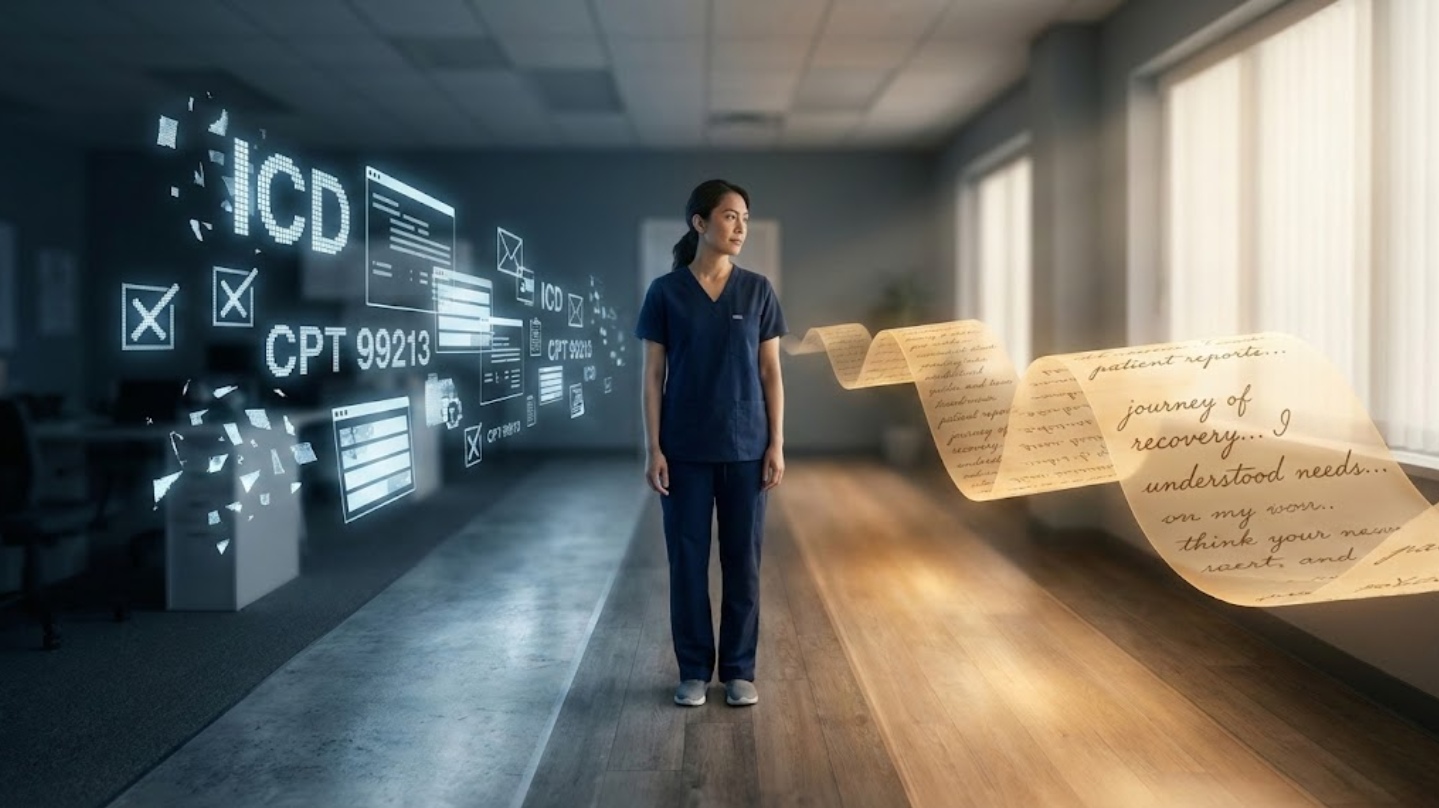
Medicine has always begun with a story. We teach medical students to take histories rather than extract data points, to listen for patterns rather than hunt for isolated variables. The best clinicians I know think in arcs, trajectories, and narratives. Yet somewhere between the bedside and the computer screen, we ask these same clinicians to abandon that narrative intelligence and behave instead like data entry operators. They move from interpretive reasoning to dropdown menus. From clinical synthesis to checkbox completion. From editor of meaning to coder of rigid templates.
The strangeness of this shift often goes unnoticed because it has been normalised over decades. But if you pause long enough to reflect on it, the contradiction becomes impossible to ignore. A consultant who can interpret a patient's multiyear diagnostic journey with remarkable nuance is asked to flatten that experience into a predetermined list of codes. A physician who serves as a peer reviewer, someone trusted to critique manuscripts, refine arguments, and edit scientific work, is forced to spend hours each week selecting ICD10 codes from long, context free lists. We have built systems that disregard how clinicians think and then wonder why documentation feels burdensome, disconnected, and ultimately unsustainable.
For years, we tolerated this because structured data enabled research, quality reporting, and reimbursement. And structured data, we believed, had to be manually produced. That assumption belonged to a world before language native systems existed. The tools have changed; the assumptions have not.
The Experiment That Shifted My Thinking
In 2022, my team conducted a small, curiosity driven experiment that ended up reshaping my view of clinical documentation entirely. Working within a secure sandbox environment and with explicit patient consent, we tested whether OpenAI GPT 3's API could extract structured clinical information directly from raw narratives, consultation notes, secure messages, and transcription logs, without clinicians completing structured fields.
These were not today’s advanced models. They were far more limited and prone to hallucination. Yet even then, the results were remarkable. The model could interpret clinical stories well enough to generate problem lists, extract medication changes, identify red flags, track disease progression, and even map terminology to established vocabularies without requiring the clinician to think in those vocabularies.
What the experiment revealed wasn’t simply that models could classify information. It showed that the structure was already inside the story. We had spent decades designing elaborate data entry systems under the assumption that clinicians must manually produce structure. But when a model can derive structure naturally from narrative, the bottleneck is no longer technological, it is conceptual.
 How We Got Here: When Billing Shaped Clinical Thinking
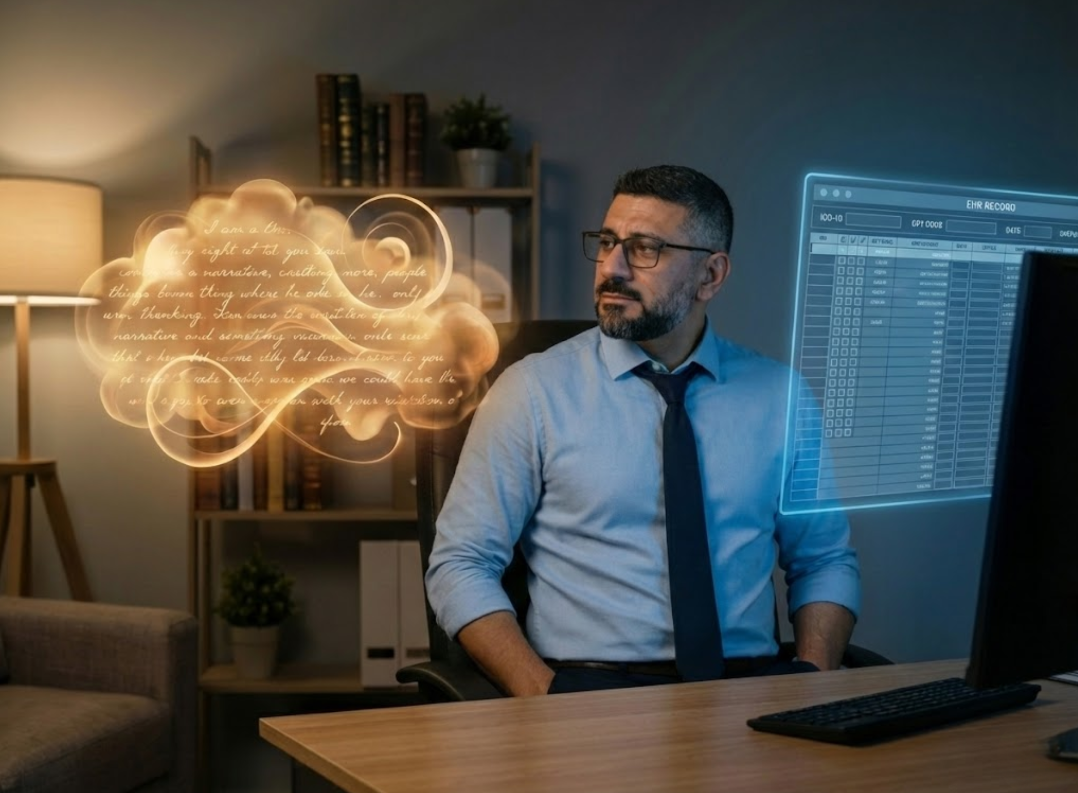
To understand why this shift matters, it helps to revisit the origins of the modern electronic health record. EHRs did not begin as cognitive tools designed to support clinical reasoning. Their earliest forms were essentially billing systems. They relied on taxonomies, ICD for diagnoses, CPT for procedures, DRGs for reimbursement, SNOMED for semantics, that served essential administrative functions but were never intended to shape clinical thought.
Over time, documentation practices began to mirror the needs of these systems. Narrative lost ground to structure. Notes grew longer but less meaningful. Clinicians found themselves documenting for billing logic rather than for patient care. The record, once a clinical compass, became a compliance artefact.
The consequences are visible across every health system: fragmented continuity, administrative overload, defensive charting, and a paradox in which clinicians spend more time documenting yet produce inconsistent structured data. We built tools that expect precision yet generate noise. We created workflows meant to save time that instead consume it. We designed systems that were supposed to illuminate clinical reasoning yet often obscure it.
The Language Native Paradigm
The arrival of secure language models that can run inside clinical environments is not a theoretical future. It marks a turning point that is already unfolding inside mainstream electronic health record systems. These tools are beginning to understand the medium clinicians naturally use: narrative. Not structured fields. Not templates. Not checklists. Narrative.
Today’s language native systems can interpret full clinical conversations, recognise negation and uncertainty, distinguish between historical and active problems, track symptom evolution over time, normalise terminology, and map information to established ontologies. Crucially, many can operate securely on premise or within a health system’s private cloud, which means privacy constraints no longer prevent adoption.
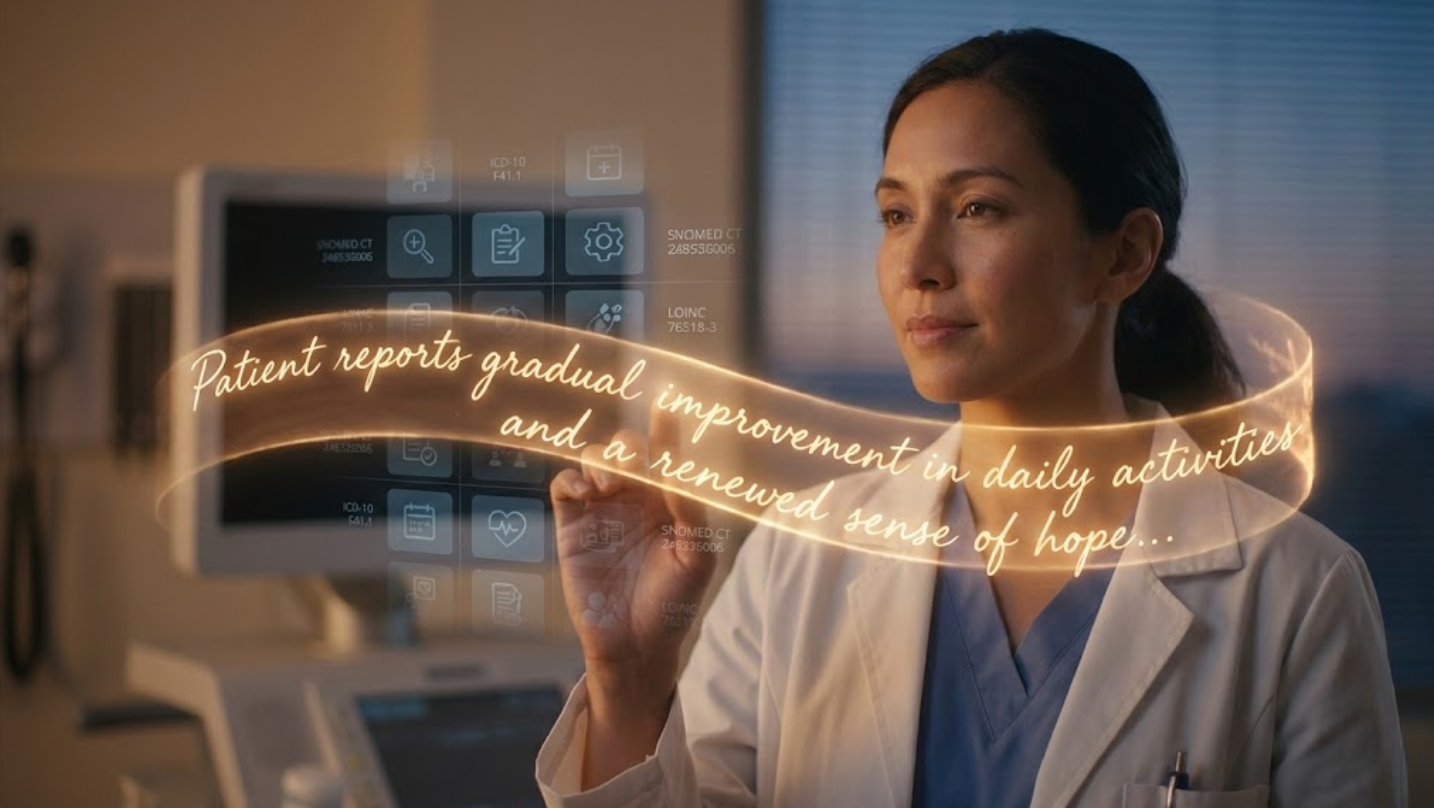
What is shifting is not the importance of structured data but the way structure is produced. Instead of clinicians generating structure manually, systems now propose it. Instead of hunting for ICD or CPT codes, clinicians review and correct machine generated suggestions. Instead of documentation being primarily a data entry task, it becomes an editorial task, one for which clinicians are naturally and professionally trained.
And this is no longer confined to research prototypes. Commercial EHRs have already begun embedding language native workflows into routine clinical practice. Epic’s integrated AI tools draft summaries and highlight relevant insights from the chart for clinician review. Oracle Health’s Clinical Digital Assistant captures clinical conversations and turns them into structured notes that clinicians approve rather than create from scratch. Companies like Heidi Health, Suki, and DeepScribe have demonstrated that narrative to structure pipelines are not only viable but already improving documentation speed and consistency in real clinical settings.
Clinicians already refine scientific manuscripts, challenge assumptions, improve clarity, and preserve conceptual accuracy. They do not rewrite papers from nothing. They shape and correct what is already there. The same dynamic is now emerging in documentation workflows. The system drafts. The clinician edits. The model structures. The clinician safeguards meaning.
Yet this progress also introduces new responsibilities. If models are generating structure, health systems must ensure transparent governance, robust validation, and continuous monitoring. Extraction accuracy must be tested. Longitudinal consistency must be evaluated. Model versions must be documented and controlled. Ethical oversight becomes essential, not optional.
What This Doesn’t Mean
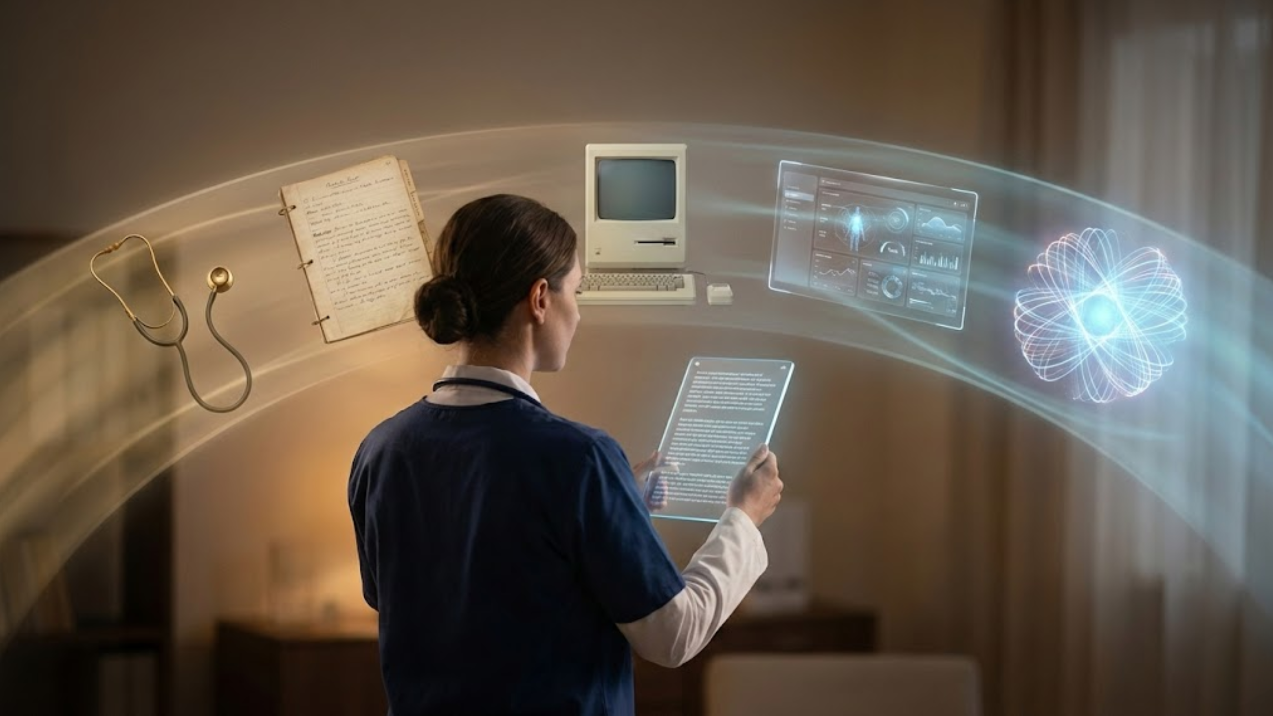
When I argue that clinicians should be editors, not coders, I am not advocating for the abolition of ICD, SNOMED, LOINC, or CPT. These remain foundational for analytics, population health, reimbursement, and regulation. Nor am I proposing the elimination of the electronic health record. Rather, I argue for its transformation, from a data entry screen into an intelligent translation layer.
A future EHR will not require clinicians to think in codes. It will store multimodal narratives, voice recordings, text notes, video transcripts, patient descriptions, and use language native middleware to generate structured outputs beneath. It will track model versions, preserve audit trails, log clinician corrections, and allow models to improve over time. The clinician will engage only at the editorial layer, ensuring accuracy and safeguarding meaning.
Interoperability, too, will evolve. Instead of rigid field by field alignment across systems, we will move toward semantic interoperability, systems exchanging meaning, not merely matching predefined data structures. While messier than perfect standardisation, it is far more achievable for real world adoption.
Why This Matters for Patient Care
The impact extends far beyond workflow efficiency. When documentation prioritises administrative requirements over narrative truth, the patient story becomes fragmented. Crucial context is lost. Decisions become less informed. A clinician seeing a patient for the first time needs to understand not only what happened but how it unfolded. Without narrative, continuity collapses.
Narrative first documentation ensures that structure emerges from meaning, not the other way around. Once narrative is preserved, structure remains endlessly derivable. But once narrative is stripped away, no amount of structured fields can recreate it.
Language native systems allow us to preserve both: a rich, human readable story and a precise, machine readable structure. This duality strengthens clinical decision making, supports analytics, and protects the patient journey from becoming distorted by administrative formalities.
The Real Barriers Aren’t Technical
Small language models already outperform manual coding for many clinical variables. On premise deployment already exists. The accuracy of narrative extraction continues to improve. Technology is no longer the limiting factor.
The real barriers are institutional: reimbursement models tied to explicit codes, regulatory frameworks built around manual documentation, fear of liability, vendor lock in, and resistance to workflow redesign. Yet these are familiar obstacles. Healthcare resisted the shift from paper to digital records too, and eventually the value became undeniable.
We are approaching another inflection point. The question is beginning to shift from "Why should we trust AI to extract structure?" to "Why should clinicians spend hours doing something a machine can do more consistently and with less cognitive burden?" Once clinicians experience narrative first documentation, returning to manual coding will feel like returning to rotary phones.
Restoring Clinicians to Their Natural Role
Clinicians were never meant to be coders. They were trained to interpret complex narratives, synthesise incomplete information, and make sense of uncertainty. We forced them into an unnatural role because we lacked tools that could bridge narrative and structure. That constraint has dissolved.
The future of documentation is not a proliferation of fields but a richer narrative with machine generated structure woven beneath it. The clinician remains essential, not as a data entry mechanism but as an editor of truth in a system that finally understands the story.
When we restore clinicians to this role, everything downstream improves: clinical reasoning, decision making, patient engagement, analytics, continuity of care, and even clinician wellbeing. The electronic health record becomes what it should have been all along: a tool that amplifies human intelligence rather than suppressing it.
Clinicians were never coders. They do not have to be.