Why Healthcare Needs AI Strategies with a Brain (and a Backbone)
· Dr. Ramy Azzam

Healthcare strategy used to be a lot like assembling IKEA furniture: follow the manual, don’t get too creative, and hope you don’t end up with extra screws. It was all about reducing risk, sticking to compliance, and staying within the comfortable confines of clinical pathways.
But artificial intelligence? That threw the manual out the window, and possibly the entire cabinet too. Building an AI strategy with an IKEA manual is like trying to navigate the Metaverse with a paper map, charmingly retro, completely useless, and you’ll probably walk into a wall.
And that often reflects in current healthcare strategies. Archaic healthcare executives who see AI as a black box (I give them some benefit of the doubt), shy away from understanding the nuances of AI, masquerading behind the stagnant wisdom of "Let's wait and see".
To them, I say "We have systems for that".
Systems that help managing dynamic uncertainty and doing right by patients and clinicians.
We call them AIMS: AI Management Systems, particularly those aligned with international standards such as ISO/IEC 42001 and the IEEE 7000 ethical design standards. They’re the operating systems for ethical, transparent, and smart AI in health.
Time to Retire the Play-it-Safe Routine
Old-school strategy was built for a different era, one with fewer variables, slower change cycles, and a tolerance for playing it safe. It was driven by executives who thought "disruption" was just a buzzword from the startup world, and who often couldn’t tell the difference between a dashboard and an Excel pivot table. It was cautious, predictable, and largely focused on protecting the status quo.
It worked. For a while. Like Blockbuster worked. Like paper charts worked.
Until they didn’t.
We now live in a world that’s predictive, hyper-personalized, and increasingly powered by machine learning models that never take coffee breaks or lose their pens. These models consume data, find patterns faster than any human, and can support decisions in real time.
“Let’s wait and see” may have sounded strategic once. Today? It’s just a sophisticated way to say, “We don’t know what to do, so let’s do nothing.” That’s not leadership.
It’s well-dressed procrastination.
And that delay can cost more than just competitive edge, it can cost trust, outcomes, and relevance..
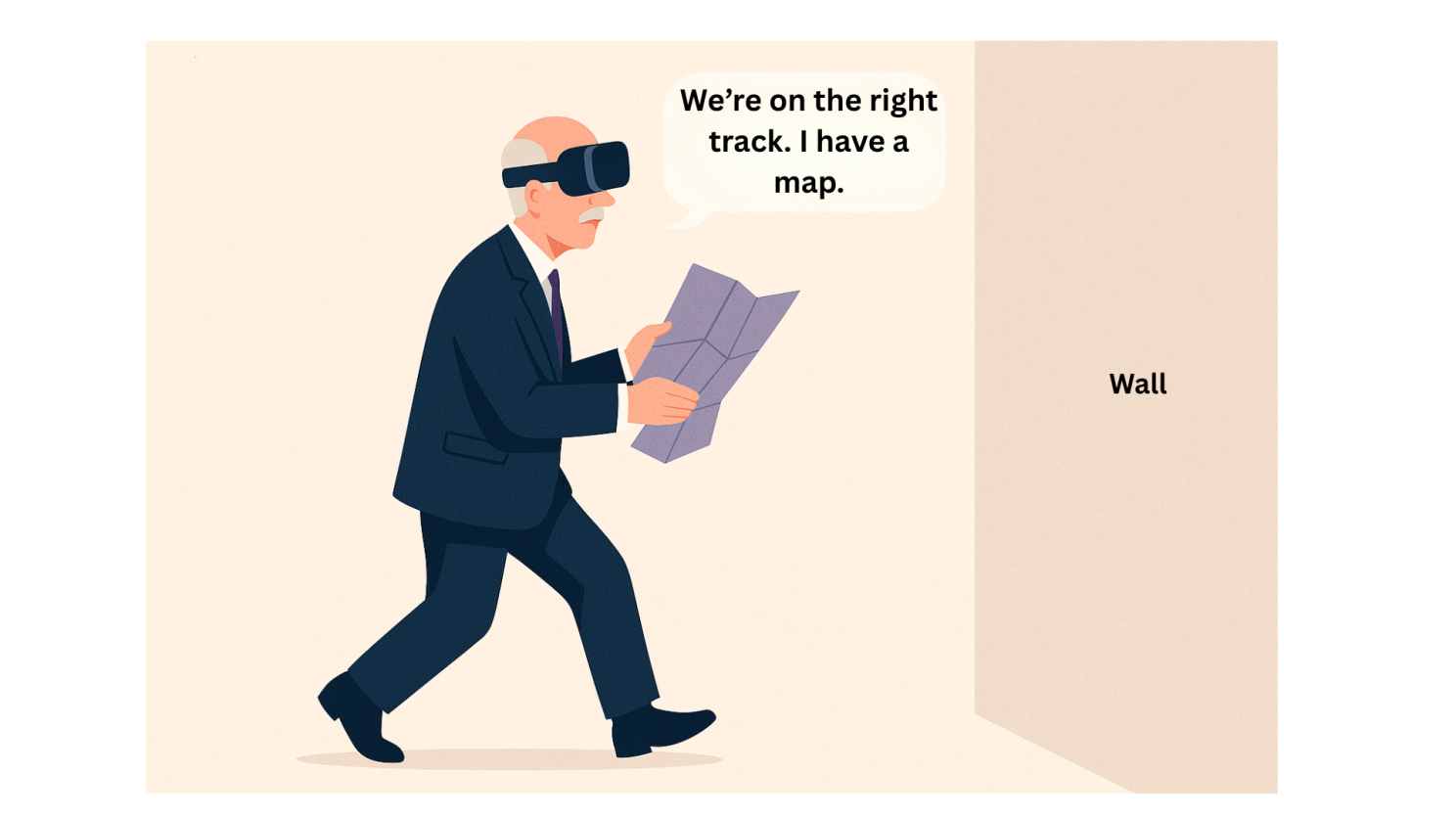
Leading the digital age with a paper map
What are AIMS and Why Should You Care?
An AI Management System is like the adult supervision AI didn’t know it needed. It makes sure your model isn’t wandering off into bias territory, hallucinating diagnoses, or creating a health equity scandal.
ISO/IEC 42001 lays out how to build and run a responsible AI governance program. And IEEE 7000? That’s the conscience. It helps you figure out what values actually matter to your patients, regulators, and board members, before your model blurts out something entirely racist, sexist, or ageist, AKA bias.
What’s inside the AIMS toolkit?
Leadership accountability and strategic planning (someone’s gotta be responsible, you can't blame it on the AI model)
Documentation and lifecycle management (yes, that includes your sneaky little LLMs)
Monitoring, audits, and continuous improvement (you break it, you fix it)
Controls to catch bias, protect patients, and keep humans in the loop (the golden rule of AI)
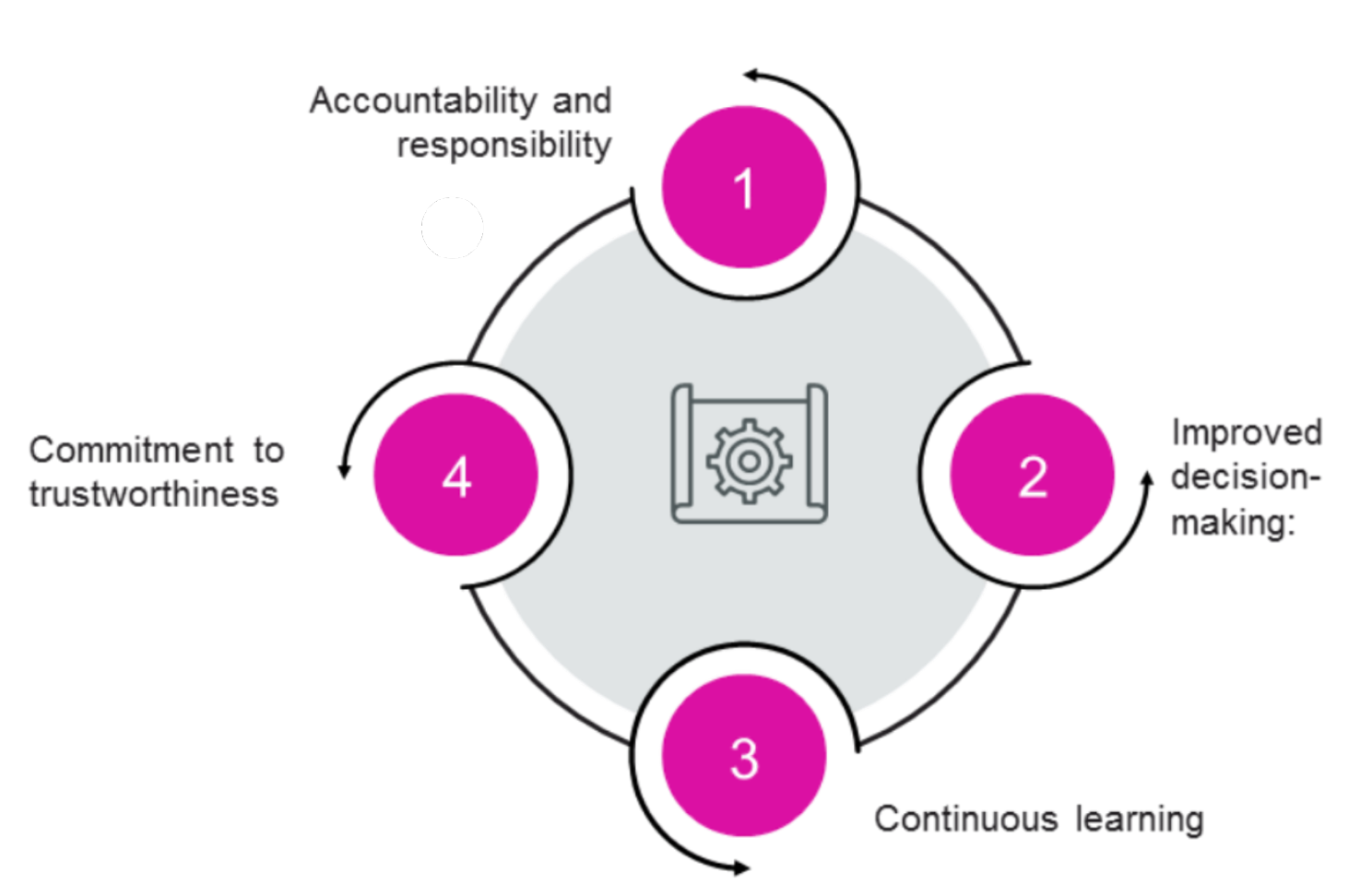
The Benefits of an AIMS
From “We’re Compliant” to “We’re Competitive”
If you think ISO 42001 is just a checklist, you’re missing the plot. Done right, AIMS gives you a competitive edge. It’s how you:
Speak the same language across engineering, ethics, and operations (finally)
Avoid launching an AI feature that ends up on the evening news
Align with emerging AI laws (yes, they’re coming for you)
Win back patient trust (yes, also patients want to understand)
Just ask Cleveland Clinic. Their AI Command Center doesn’t just optimize workflows. It’s a whole ecosystem of tech, talent, and trust, all underpinned by robust governance. The result? Fewer surprises, more saved lives.
In 2014, I was lucky to be part of the team that operationalized the first Telemedicine centre in the region with these exact principles. We adapted PMI's PMBOK in project & program governance to operationalize a robust centralized model, that would service as a launchpad to future innovations in digital and virtual health in Abu Dhabi. While the centralized model worked in 2014, in this day and age it had to evolve to a decentralized model.
[Another article for another day, on how some providers copied and pasted our centralized model from 10 years ago, without any current contextual adaptation ????]
How to Actually Build an AIMS
Rolling out an AIMS doesn’t need to feel like building the Death Star. Start simple. Think cross-functional. And keep the jargon to a minimum.
A starter pack for healthcare execs:
Strategic alignment: Put together an AI governance council. Clinicians, techies, ethicists. Yes, all of them.
Train your people: AI 101, bias spotting, ethics-by-design. Brains before bots.
Do the risk management thing: Use ISO/IEC 23894 to map where AI can go wrong, then build guardrails. And no risk management, is not only risk avoidance.
Put processes in place: Logs, overrides, traceability. Your audit team will love you. Everyone will.
Monitor & iterate: Dashboards that tell you when something’s off. Root cause workflows. Celebrate learning.
Enter the Learning Health System: Feedback is the New Fuel
If AIMS is the engine, the Learning Health System (LHS) is the map, and a pretty clever one at that. In a mature LHS, every single patient interaction feeds data back into the system.
Each input helps refine how care is delivered, which tools are prioritized, and which protocols actually work.
Now imagine trying that without an AIMS in place. You’d be stuck in a broken loop of confirmation bias, replicating bad decisions, and making your AI models dumber with every cycle. Worse still, you'd be making the same mistake twice and calling it a pattern.
With a proper AIMS framework, the LHS doesn’t just collect data, it understands it. It surfaces hidden patterns, nudges teams toward better decisions, and builds a continuous improvement culture. Over time, AI improves, protocols evolve, outcomes get better, and clinical staff breathe a little easier.
And yes, patients benefit most, because a truly learning health system, powered by responsible AI, is the closest thing we have to turning healthcare into a precision-guided, feedback-powered, trust-centric ecosystem.
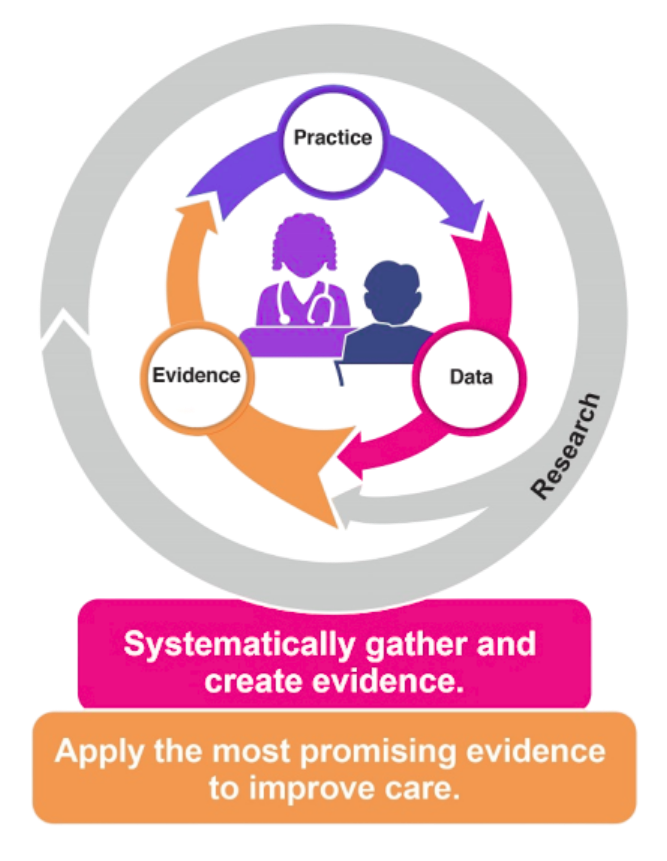
We don't need to fail fast, we need to learn fast
Strategy Is Wearing a New Suit.
AI isn’t something you “adopt.” It’s something you host, guide, and hold accountable. And that takes more than a great algorithm. It takes systems, values, and the courage to operationalize both.
ISO/IEC 42001 and IEEE 7000 together don’t just give you governance, they give you a compass and a backbone. And as someone who’s had a front-row seat implementing these standards and evaluating AI systems ethically, trust me: it’s far easier to build an AIMS than to explain to regulators why you didn’t.
A Nudge to Healthcare Leaders:
Don’t just check the box... build the system
Don’t just launch the pilot... scale the practice
Don’t just chase trends... lead responsibly
You don’t need a PhD in machine learning or a team of philosopher coders. You need clarity, courage, and the right frameworks.